I still remember the first time I saw a newly crimped AC hose leaking on the pressure test bench. The fitting looked perfect outside, but refrigerant bubbles still appeared. That problem can waste time, money, and customer trust.
AC hose leaks after crimping usually happen because of wrong die size, poor hose insertion depth, damaged fittings, bad hose quality, or unstable crimping pressure. A correct crimp needs proper hose matching, stable machine pressure, and accurate fitting alignment.
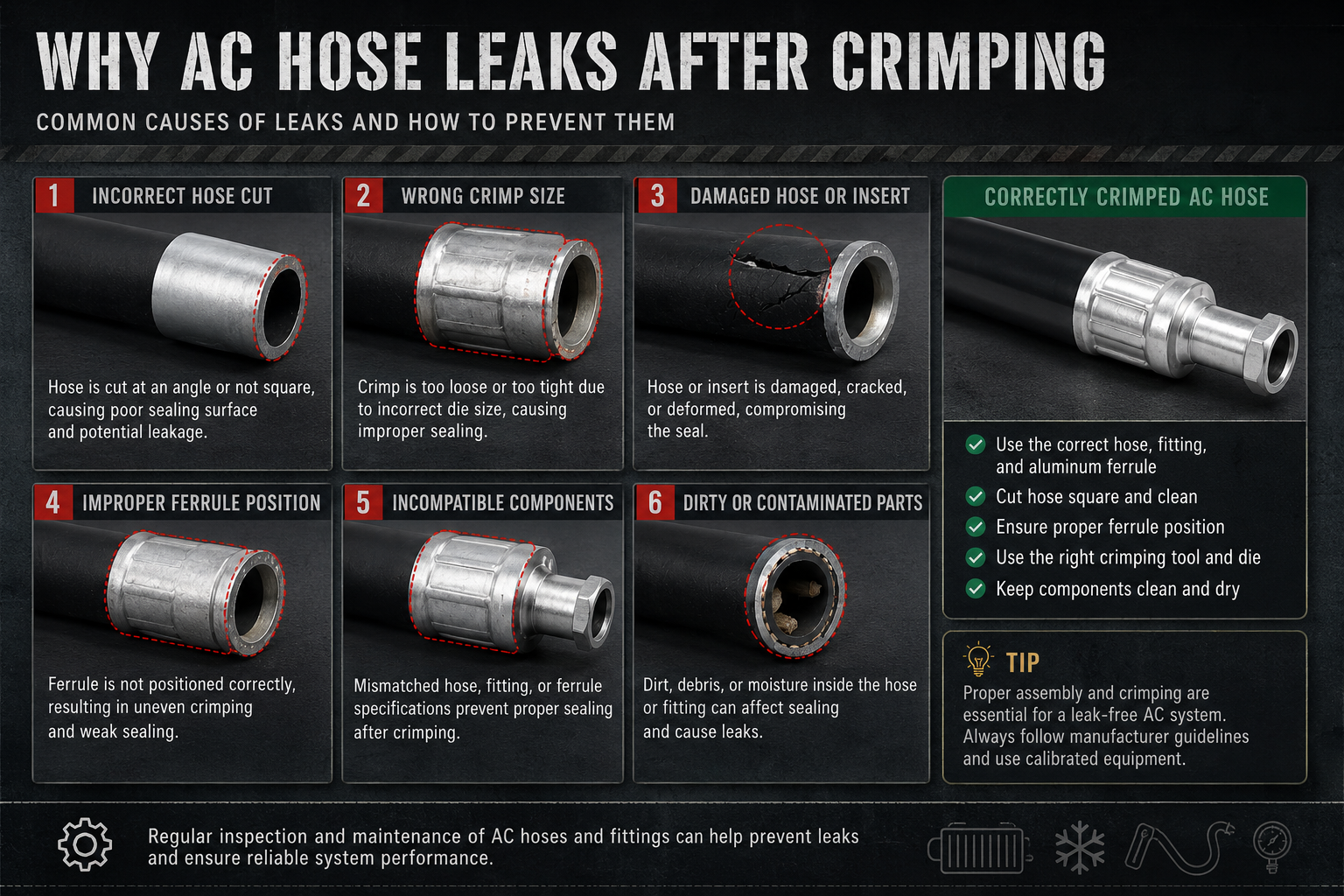
Many people think a hose only needs enough pressure during crimping. In real work, that is not true. I learned that small details often decide whether the hose lasts for years or leaks after a few days. I want to share the problems I have seen and the methods I use to avoid them.
How to Crimp AC Hose Correctly?
Many beginners damage expensive hoses because they rush the crimping process. I made the same mistake years ago when I first started working with automotive AC hose assemblies.
To crimp AC hose correctly, I always check hose size, fitting type, die size, insertion depth, and crimp diameter before starting the machine. Stable hydraulic pressure and correct alignment are also very important.
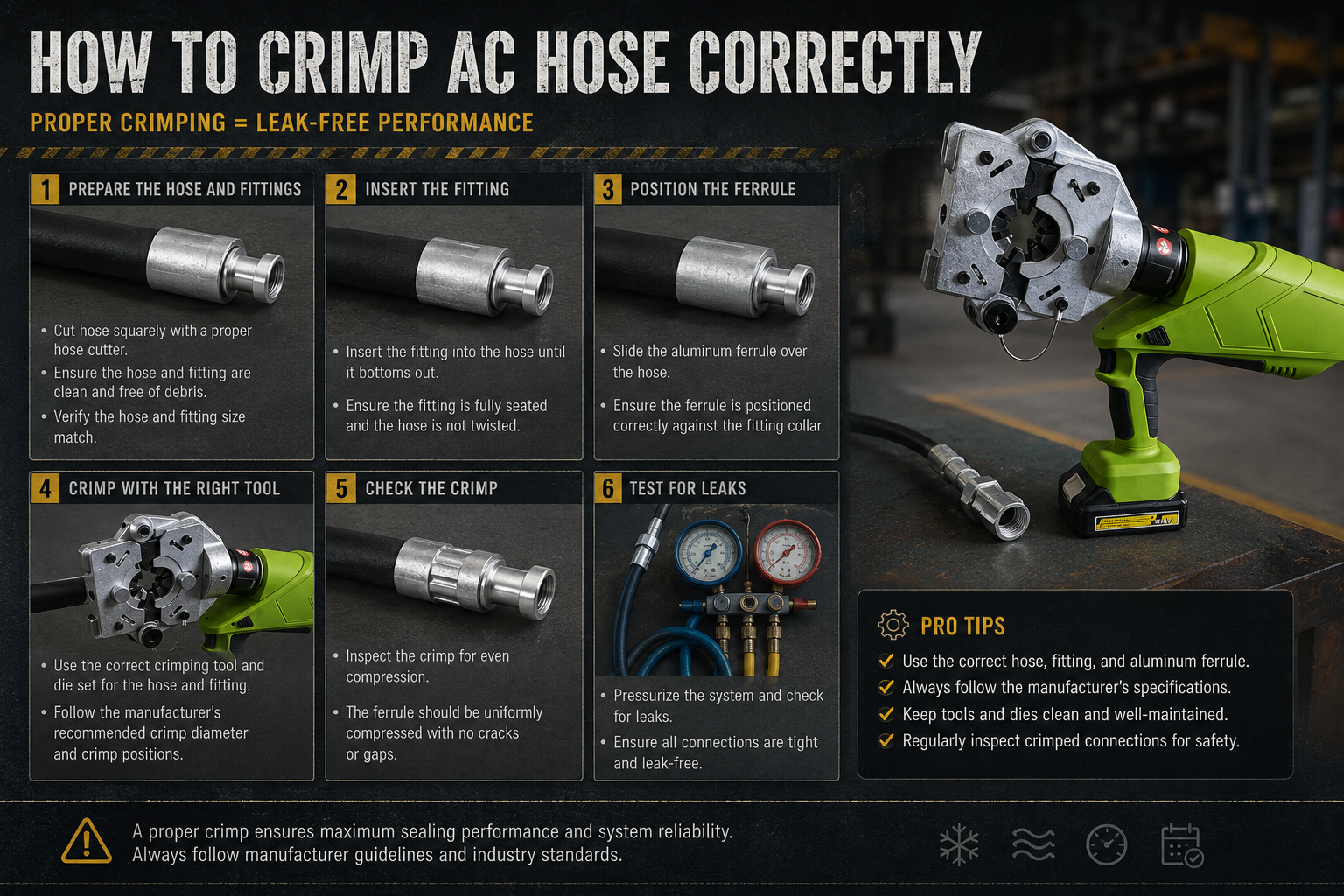
Step-by-Step AC Hose Crimping Process
I always follow a fixed process. This helps me reduce mistakes and improve consistency.
Step 1: Check Hose and Fitting Compatibility
Some hoses look similar outside, but their wall thickness is different. Some fittings also have different barb structures. If the fitting does not match the hose, the crimp will fail sooner or later.
| Item | What I Check |
|---|---|
| Hose Size | Inside diameter and outside diameter |
| Hose Layer | 4-layer, 5-layer, or barrier hose |
| Fitting Type | Beadlock or reduced barrier fitting |
| Ferrule Size | Match with hose specification |
Step 2: Cut the Hose Properly
I always use a sharp hose cutting machine. A bad cut can damage the inner tube. That creates sealing problems later.
Step 3: Mark Insertion Depth
I use a marker before pushing the fitting into the hose. This helps me confirm whether the fitting moved during crimping.
Step 4: Choose Correct Dies
Wrong dies are one of the most common reasons for leakage. Many low-cost workshops guess the die size instead of measuring it.
Step 5: Test the Finished Assembly
I always pressure test the hose after crimping. This step saves much more money than repairing customer complaints later.
I also learned another important thing over the years. Stable electrical power matters a lot. In some workshops, voltage drops during machine operation. That can reduce crimping force and create weak crimps. Many people ignore this problem.
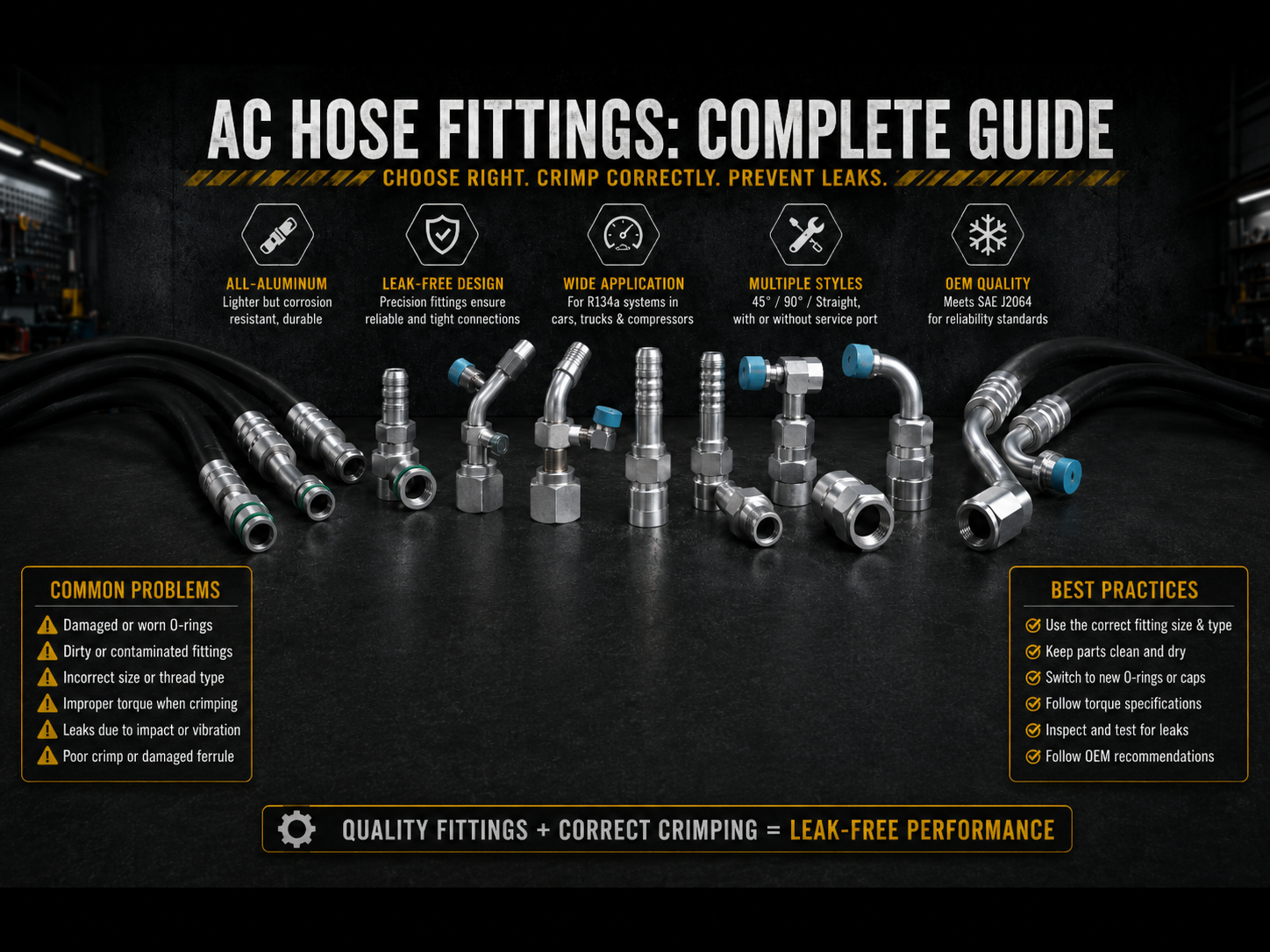
Common AC Hose Fitting Problems?
I often see technicians blaming the hose when the real issue comes from the fitting. A damaged or low-quality fitting can ruin the whole assembly.
Common AC hose fitting problems include cracked ferrules, poor plating, incorrect barb dimensions, loose tolerances, and corrosion. These problems can cause leaks, vibration failure, and reduced hose life.

Most Common Problems I Have Seen
I worked with many workshops and importers over the years. Some problems appear again and again.
Poor Surface Finish
Cheap fittings often have rough inner surfaces. That damages the hose inner tube during assembly.
Incorrect Barb Design
If the barb is too sharp, it cuts the hose. If it is too smooth, the hose may slip under pressure.
| Problem | Result |
|---|---|
| Sharp barb | Inner tube damage |
| Weak ferrule | Cracking after crimping |
| Poor plating | Rust and corrosion |
| Loose tolerance | Refrigerant leakage |
Low Salt Spray Resistance
In coastal areas, corrosion becomes a serious issue. I saw fittings rust badly after only several months because the plating quality was poor.
Wrong Material Selection
Some aluminum fittings are too soft. Some steel fittings are too brittle. Material quality changes the final performance a lot.
I also noticed another thing. Many buyers only compare price. They do not compare tolerance consistency. A slightly cheaper fitting may create much higher after-sales costs later. Good fittings help workshops save time and improve reputation.
How to Choose AC Hose Fittings?
Choosing the wrong fitting can create endless repair problems. I learned this lesson early when I handled several failed hose assemblies from different suppliers.
To choose AC hose fittings correctly, I focus on hose compatibility, material quality, pressure resistance, corrosion resistance, and dimensional accuracy. Consistent fitting quality is more important than very low price.
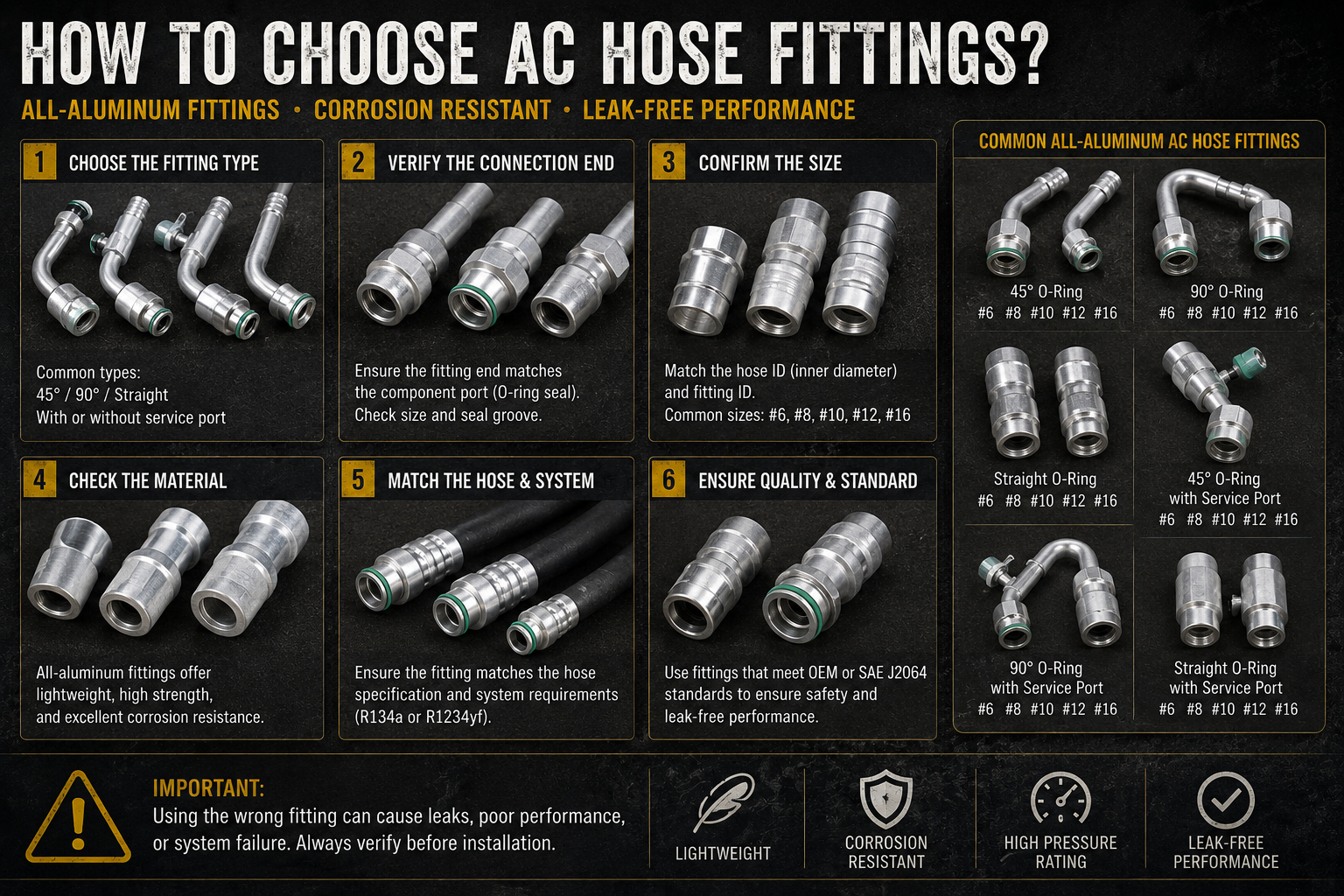
My Method for Choosing Reliable Fittings
I usually start with application requirements first.
Understand the Working Environment
Different vehicles and climates need different fitting quality levels.
| Environment | Recommended Focus |
|---|---|
| Hot climate | Heat resistance |
| Coastal area | Corrosion resistance |
| Heavy vibration | Strong ferrule structure |
| Repair shop | Easy installation |
Check Manufacturing Consistency
I always compare several production batches. Some factories make good samples but fail during mass production.
Verify Crimp Dimensions
Good fittings should provide stable crimp diameters every time. Large dimensional variation creates unstable sealing.
Evaluate Long-Term Supply Stability
For importers and wholesalers, stable supply matters a lot. Sudden design changes can create compatibility problems with existing hose inventory.
I also like suppliers who understand technical details instead of only discussing price. Real technical support becomes very useful when solving customer problems. Over the years, I found that professional communication usually means better product consistency too.
Conclusion
Good AC hose assemblies depend on correct crimping, reliable fittings, stable machine performance, and careful inspection. Small details make the biggest difference in long-term automotive AC reliability.
<!--[googlesitekit-end-of-content]-->