
Choosing the wrong A/C hose is not just a cost problem. It causes refrigerant loss, system failure, and in some markets, a compliance issue that is very hard to fix after the fact1.
The short answer: the hose type you need depends on the refrigerant your system uses, not on your budget. R-1234yf and HFO systems require a barrier hose to meet low-permeation standards2 such as SAE J2064. R-134a systems can run on standard rubber hose without a problem. Getting this wrong creates more cost than the price difference ever saved.
I talk to workshop buyers and distributors every week. A lot of them come to us after a bad experience — a hose that looked fine on the outside, but the system kept losing charge. Most of the time, the hose was not defective. It was just the wrong type for that refrigerant. This article is here to help you avoid that exact situation.
What Is a Barrier Hose?
Most people hear "barrier hose" and think it just means a stronger or more premium product. That is not the right way to think about it.
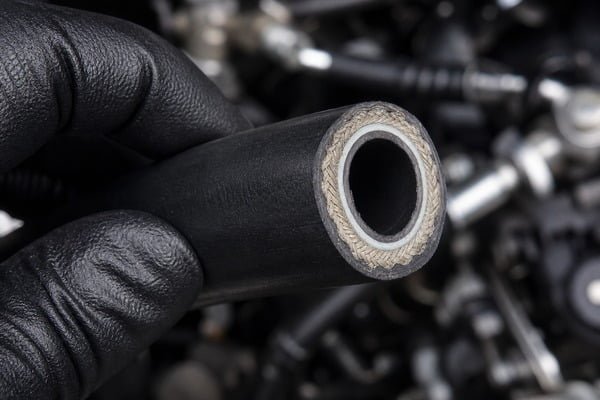
A barrier hose is an A/C hose with a low-permeation inner layer — usually nylon or EVOH — built specifically to stop refrigerant molecules from passing through the hose wall3. This design meets the permeation requirements set by SAE J2064 Type C and Type D specifications, which apply to systems using R-1234yf and similar low-GWP refrigerants4.

From our side of production, the key difference is in that inner laminate. Standard rubber does not stop small refrigerant molecules from migrating through the wall over time. The barrier layer is there specifically to slow that migration down to a level that regulated markets accept.
How the barrier layer works in practice
The structure of a typical barrier hose looks like this:
| Layer | Material | Function |
|---|---|---|
| Inner tube | Nylon or EVOH laminate | Blocks refrigerant permeation |
| Reinforcement | Braided fiber or wire | Handles system pressure |
| Outer cover | EPDM or CR rubber | Protects from heat and abrasion |
The barrier layer is not a marketing feature. It exists because refrigerant manufacturers and vehicle OEMs needed a hose that could contain newer refrigerants at a level that older rubber construction could not achieve5. When a customer asks us why barrier hose costs more, we explain that it is not about the outer rubber — it is about what is inside.
For distributors stocking hoses for multiple vehicle types, barrier hose is the correct SKU for any vehicle that runs R-1234yf. It is not an upgrade option for those vehicles. It is the required spec.
What Is a Standard Rubber Hose?
Standard rubber A/C hose has been the industry baseline for decades. It works well. It is still the right product for a large portion of the vehicles on the road today.
A standard rubber A/C hose uses an EPDM or NBR inner tube without a barrier laminate. It is designed for R-134a refrigerant systems and meets SAE J2064 Type A and Type B specifications6. For R-134a applications, it provides reliable sealing, good pressure handling, and a long service life at a lower cost than barrier hose.

We produce both types in the same factory. Standard rubber hose is not a low-quality product. It is the right product for the right application. The problem only appears when someone uses it in a system that needs a barrier spec — not because the hose is defective, but because R-134a and R-1234yf behave very differently when it comes to permeation.
Where standard rubber hose still makes sense
| Application | Refrigerant | Standard Rubber Hose? |
|---|---|---|
| Pre-2013 passenger vehicles | R-134a | Yes, correct choice |
| Light commercial vehicles (older fleet) | R-134a | Yes, correct choice |
| Workshop general replacement stock | R-134a | Yes, stock this type |
| Post-2017 passenger vehicles (EU/US) | R-1234yf | No, use barrier hose |
For distributors serving workshops that handle older domestic fleets, standard rubber hose is still a core SKU. It should not be phased out or treated as obsolete. It is just bounded to a specific refrigerant type.
How Do They Perform Differently?
Both hose types are built to handle A/C system pressure and heat. The performance gap is not about pressure rating or flexibility. It is specifically about what happens to the refrigerant over time.
The main performance difference between barrier and standard rubber hose is refrigerant permeation rate. Standard rubber allows a measurable level of refrigerant to pass through the hose wall over time7. Barrier hose reduces that rate to meet SAE J2064 low-permeation requirements. For R-1234yf, this difference is not a preference — it determines whether the system stays in spec.

What permeation actually causes in the field
Based on what our customers report, slow refrigerant loss through a permeable hose in an R-1234yf system leads to a recognizable pattern:
- The system cools well after a recharge
- Performance drops again within months, not years
- The shop recharges again without finding a visible leak
- Eventually the compressor shows strain from running low
This pattern often gets blamed on the compressor or the fittings. In many cases the hose is the real source. The refrigerant is not leaking from a joint — it is passing through the wall.
| Performance Factor | Standard Rubber Hose | Barrier Hose |
|---|---|---|
| Refrigerant permeation (R-134a) | Acceptable per SAE J2064 Type A/B | Lower than required, no benefit |
| Refrigerant permeation (R-1234yf) | Fails low-permeation requirement | Meets SAE J2064 Type C/D |
| Pressure handling | Good | Good |
| Flexibility and routing | Good | Good |
| Heat resistance | Good | Good |
The takeaway here is simple. For R-134a, both types perform fine. For R-1234yf, only barrier hose performs within spec.
Which Refrigerants Are Compatible With Each Hose?
This is the most important section in this article. If you take nothing else away, take this.
Refrigerant type determines hose type. Standard rubber hose is compatible with R-134a. Barrier hose is required for R-1234yf and recommended for other HFO-based refrigerants. Using a standard rubber hose in an R-1234yf system creates a slow refrigerant loss problem that does not show up as an obvious leak and is hard to diagnose without knowing the hose spec.
Matching hose type to refrigerant
| Refrigerant | System Type | Required Hose Type | SAE Reference |
|---|---|---|---|
| R-134a | Most pre-2015 vehicles | Standard rubber | SAE J2064 Type A/B |
| R-1234yf | Most post-2017 EU/US vehicles | Barrier hose | SAE J2064 Type C/D |
| R-12 (legacy) | Classic vehicles | Specialty hose | Separate spec |
| Blended HFO refrigerants | Varies | Check spec sheet | Verify per fluid |
In our production experience, the most common mismatch we see in the field is a distributor who stocks only standard rubber hose and sells it across all vehicle types. The R-134a vehicles are fine. The R-1234yf vehicles start showing charge loss within a season.
For workshop buyers, the decision process should go in this order: check the refrigerant type on the vehicle data label → look up whether it requires a low-permeation hose → buy the correct spec. Budget comes after spec, not before.
How Long Does Each Type Last?
Hose lifespan is affected by heat cycles, pressure fluctuation, and refrigerant chemistry. Under the right conditions, both hose types last well.
In matched applications — meaning the right hose for the right refrigerant — both standard rubber and barrier hose offer a comparable service life of several years under normal workshop and daily-use conditions. Barrier hose does not automatically last longer. What shortens hose life is a mismatch between hose type and refrigerant chemistry.
What actually shortens hose life
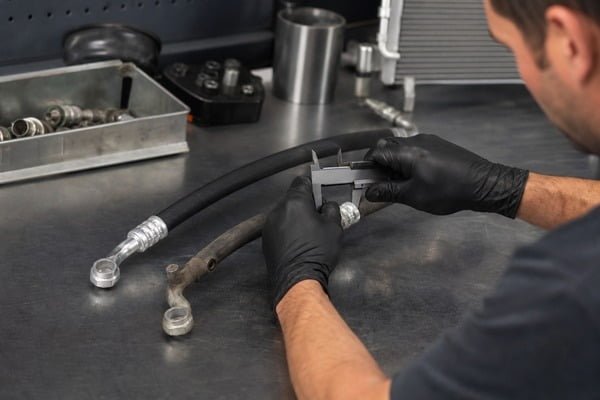
From customer feedback across different markets, the lifespan issues we hear about most often are not random. They follow a pattern tied to application mismatch or installation errors:
| Factor | Effect on Standard Rubber | Effect on Barrier Hose |
|---|---|---|
| R-134a system, correct use | Long service life | Long service life (no added benefit) |
| R-1234yf system, wrong hose type | Gradual permeation, shortened effective life | Normal service life |
| Heat exposure from engine proximity | Accelerates aging in both types | Accelerated aging in both types |
| Improper crimping or fitting torque | Early joint failure in both types | Early joint failure in both types |
| Ozone and UV exposure (outer cover) | Cover degradation over time | Cover degradation over time |
The practical point here is that hose lifespan is not a reliable argument for choosing barrier hose over standard rubber. If you use standard rubber on an R-134a vehicle, it lasts just as long. The lifespan argument only applies when a mismatched hose degrades faster because of chemical incompatibility with the refrigerant it carries.
What Is the Cost Difference?
Price is usually the first thing buyers ask about. It should be the last thing they decide on after confirming the refrigerant spec.
Barrier hose costs more than standard rubber hose. The price gap varies by supplier and order volume, but barrier hose typically runs higher due to the added inner laminate material and more complex construction. However, using the cheaper hose in the wrong application creates a total cost that is much higher than the price difference.

The real cost calculation
The "cheaper upfront" logic breaks down fast when you map out what actually happens after a wrong hose goes into service:
| Cost Item | Standard Rubber in R-134a System | Standard Rubber in R-1234yf System |
|---|---|---|
| Initial hose cost | Low | Low |
| Recharge frequency | Normal | More frequent due to permeation loss |
| Refrigerant cost over time | Normal | Higher — R-1234yf is more expensive than R-134a |
| Compressor wear from low charge | Minimal | Increased over time |
| Rework and return risk | Low | High if system stays underperforming |
| Compliance risk (regulated markets) | None | Present if refrigerant venting regulations apply |
R-1234yf itself costs significantly more per kilogram than R-134a8. A hose that allows it to slowly escape is not just a hose problem — it is a recurring refrigerant cost problem. In markets where refrigerant handling is regulated, there is also a compliance dimension to repeated top-ups.
For distributors, the cost calculation also includes returns and customer complaints. A workshop that installs the wrong hose type and deals with repeat failures is not a happy customer. Getting the spec right upfront avoids that conversation entirely.
Which One Should You Choose?
By this point the answer should be clear, but let me state it directly so there is no ambiguity.
Choose standard rubber hose for R-134a systems. Choose barrier hose for R-1234yf and HFO-based refrigerant systems. The decision is not about preference or budget — it is about matching the hose specification to the refrigerant. Any other starting point creates a risk that costs more than the hose itself.

A simple decision guide for buyers
| Your situation | What to buy |
|---|---|
| Replacing hose on a pre-2015 R-134a vehicle | Standard rubber hose, SAE J2064 Type A or B |
| Replacing hose on a post-2017 EU or US market vehicle | Check refrigerant type — likely R-1234yf, buy barrier hose |
| Stocking for a workshop with mixed older fleet | Stock standard rubber as primary SKU, add barrier for newer vehicles |
| Stocking for a distributor serving a regulated market | Carry both — your customers need both, and selling the wrong type creates returns |
| Unsure what refrigerant the vehicle uses | Check the data label under the hood or ask the customer before ordering |
For distributors managing SKUs across a mixed market, the practical answer is to stock both types and train your sales team to ask the right first question: what refrigerant does the vehicle use? That one question gets the buyer to the correct product without any guesswork.
We supply both types from the same production line, so OEM labeling, fitting compatibility, and crimping specs stay consistent across your full hose inventory. That makes stocking both types simpler than it sounds.
Conclusion
Match your hose type to the refrigerant, not the budget. R-134a takes standard rubber. R-1234yf needs barrier hose. Everything else follows from that.
<!--[googlesitekit-end-of-content]-->
"Regulatory Requirements for MVAC System Servicing | US EPA", https://www.epa.gov/mvac/regulatory-requirements-mvac-system-servicing. The EU F-Gas Regulation (EU) No 517/2014 restricts the release of fluorinated greenhouse gases and imposes obligations on operators of equipment containing such gases, including requirements for leak checking and certified handling; permeation losses from non-compliant hose assemblies may constitute unintended emissions under such frameworks. Evidence role: general_support; source type: government. Supports: That regulated markets impose compliance obligations on refrigerant handling that can be implicated by hose-related permeation losses. Scope note: The regulation primarily targets intentional venting and large stationary systems; its direct application to automotive hose permeation in workshop settings depends on national enforcement interpretation ↩
"Listing of HFO-1234yf under the Significant New Alternatives Policy ...", https://www.regulations.gov/document/EPA-HQ-OAR-2021-0347-0025. Industry technical guidance and OEM service documentation consistently specify low-permeation barrier hose for R-1234yf systems, reflecting the refrigerant's higher molecular permeability through standard elastomeric materials. Evidence role: expert_consensus; source type: institution. Supports: That barrier hose is a required specification for R-1234yf automotive A/C systems, not an optional upgrade. Scope note: OEM requirements vary by manufacturer and model year; a single universal mandate does not exist across all vehicle platforms ↩
"Development and Characterization of Electrospun Fiber-Based Poly ...", https://pmc.ncbi.nlm.nih.gov/articles/PMC8271863/. EVOH (ethylene vinyl alcohol copolymer) is widely documented in polymer science literature as an exceptional gas barrier material, with its hydroxyl groups forming a tightly packed crystalline structure that significantly impedes diffusion of small molecules including refrigerant gases. Evidence role: mechanism; source type: paper. Supports: That EVOH and nylon function as effective low-permeation barrier layers in automotive A/C hose due to their polymer chain structure and low gas diffusivity. Scope note: Barrier effectiveness of EVOH is sensitive to humidity exposure; performance data from dry-condition testing may not fully represent in-service automotive conditions ↩
"[PDF] superior quality refrigeration hoses - Manuli | Hydraulics", https://www.manuli-hydraulics.com/wp-content/uploads/2021/09/BR0006_03.pdf. SAE International's J2064 standard establishes performance classifications for refrigerant transport hose assemblies, with Type C and Type D designations specifying reduced permeation limits relevant to HFO-based refrigerants such as R-1234yf. Evidence role: definition; source type: institution. Supports: That SAE J2064 Type C and D define low-permeation requirements applicable to R-1234yf hose assemblies. Scope note: Access to the full standard text requires purchase; publicly available summaries may not detail all subtype criteria ↩
"Listing of HFO-1234yf under the Significant New Alternatives Policy ...", https://www.regulations.gov/document/EPA-HQ-OAR-2021-0347-0025. The commercialization of R-1234yf as a low-GWP replacement for R-134a required corresponding updates to A/C system component specifications, including hose assemblies, as the new refrigerant's permeation characteristics through standard elastomeric materials exceeded acceptable limits under updated SAE and OEM standards. Evidence role: historical_context; source type: research. Supports: That the introduction of HFO refrigerants such as R-1234yf prompted automotive OEMs and standards bodies to develop and mandate low-permeation barrier hose constructions. Scope note: Primary documentation of OEM development decisions is typically contained in internal engineering records or SAE technical papers that may require institutional access ↩
"[PDF] superior quality refrigeration hoses - Manuli | Hydraulics", https://www.manuli-hydraulics.com/wp-content/uploads/2021/09/BR0006_03.pdf. SAE J2064 establishes dimensional, pressure, and permeation performance classifications for automotive refrigerant hose; Type A and Type B designations historically correspond to constructions suitable for R-134a service without the low-permeation inner laminate required by Type C and D. Evidence role: definition; source type: institution. Supports: That SAE J2064 Type A and Type B classifications define performance requirements for standard rubber hose used in R-134a automotive A/C systems. Scope note: The full classification criteria are contained within the paid standard document; this characterization is based on publicly available technical summaries and may not capture all subtype distinctions ↩
"[PDF] Compatibility of R1234yf and R134a and Lubricants used in ...", https://docs.lib.purdue.edu/cgi/viewcontent.cgi?article=3057&context=iracc. Research on gas permeation through elastomeric polymers demonstrates that small refrigerant molecules, including HFCs and HFOs, diffuse through rubber matrices via a solution-diffusion mechanism, with permeation rates dependent on molecular size, polymer free volume, and temperature. Evidence role: mechanism; source type: paper. Supports: That standard elastomeric rubber hose materials permit refrigerant molecules to diffuse through the hose wall, resulting in measurable permeation loss. Scope note: Permeation rates are highly material- and refrigerant-specific; general polymer permeation studies may not directly quantify rates for specific automotive hose compounds ↩
"Pricing for R1234yf refrigerant AC charge? : r/MechanicAdvice - Reddit", https://www.reddit.com/r/MechanicAdvice/comments/wfcwsg/pricing_for_r1234yf_refrigerant_ac_charge/. Market analyses of automotive refrigerant pricing have consistently documented R-1234yf trading at a significant premium over R-134a, attributable to more complex synthesis processes and patent licensing structures. Evidence role: statistic; source type: research. Supports: That R-1234yf carries a substantially higher per-kilogram cost than R-134a in automotive service markets. Scope note: Refrigerant prices fluctuate with supply conditions and regional market factors; any specific figure cited may not reflect current pricing ↩