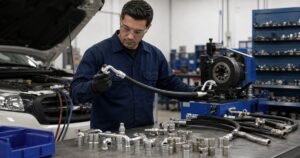
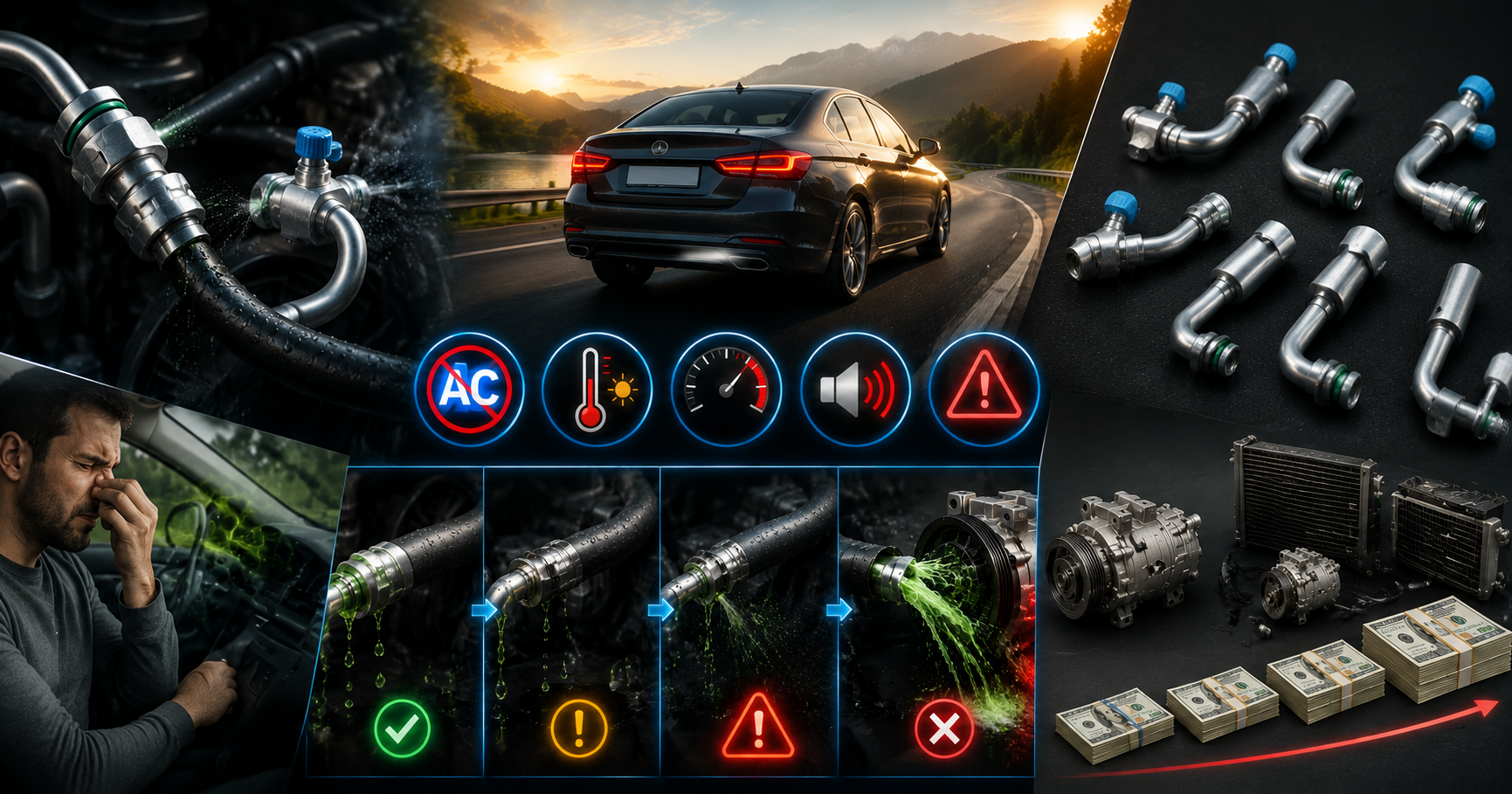
Your AC hose is leaking but you need your car for work. You wonder if driving will cause expensive damage or safety risks.
You can drive short distances with minor AC hose leaks, but continued driving risks compressor damage, complete system failure, and expensive repairs. Stop driving immediately if you hear grinding noises or see rapid refrigerant loss.
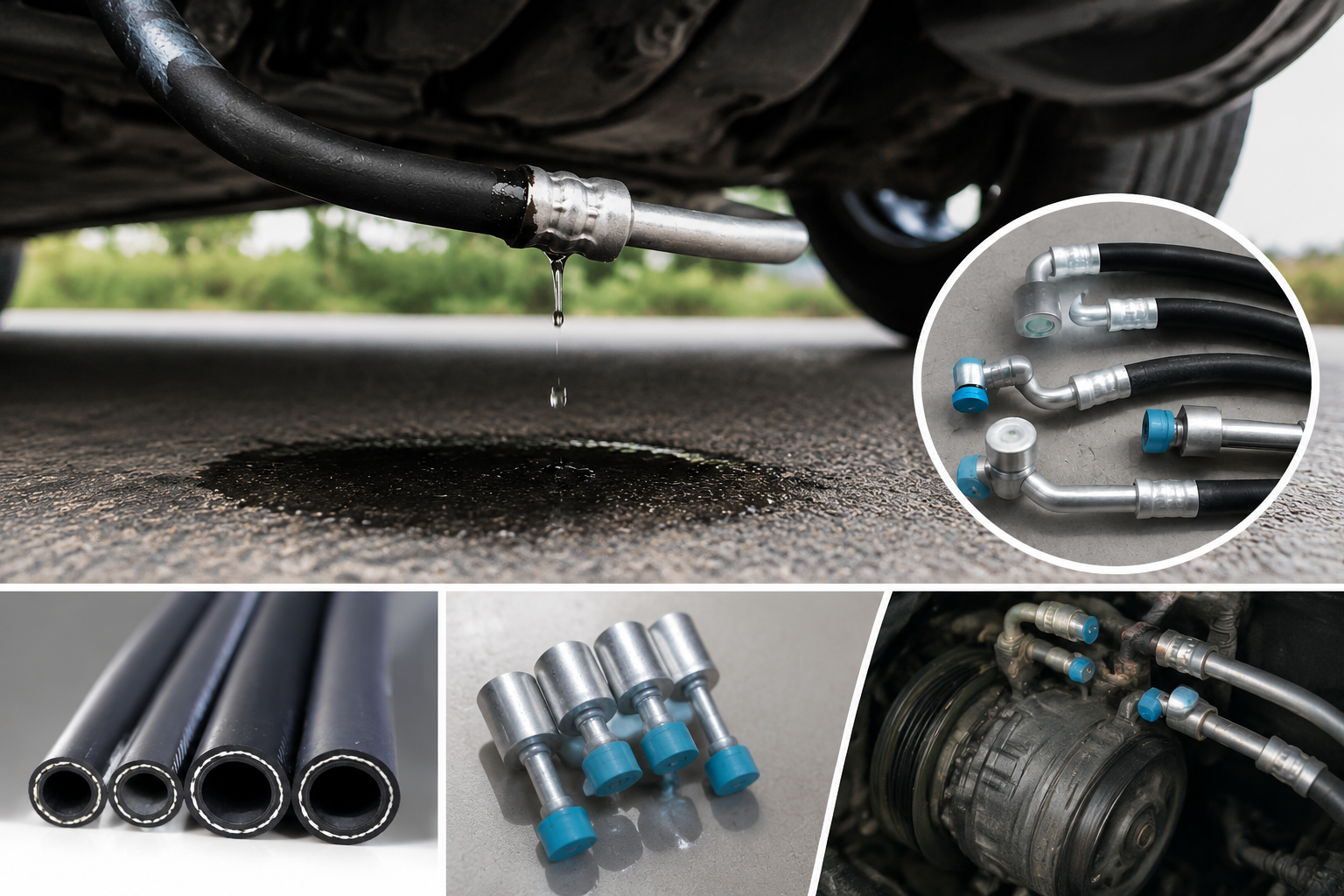
I've seen too many customers turn small leak problems into major repair bills by continuing to drive. During my years running an AC company, I learned that knowing when to stop driving saves thousands in repair costs. Let me share what really happens when you ignore AC leaks.
What Happens When an AC Hose Starts Leaking?
AC hose leaks create a chain reaction of problems throughout your cooling system. Understanding this process helps you make smart decisions.
When AC hoses leak, refrigerant escapes gradually, reducing system pressure and cooling capacity1. The compressor works harder to maintain performance, generating excess heat and accelerating wear on internal components.
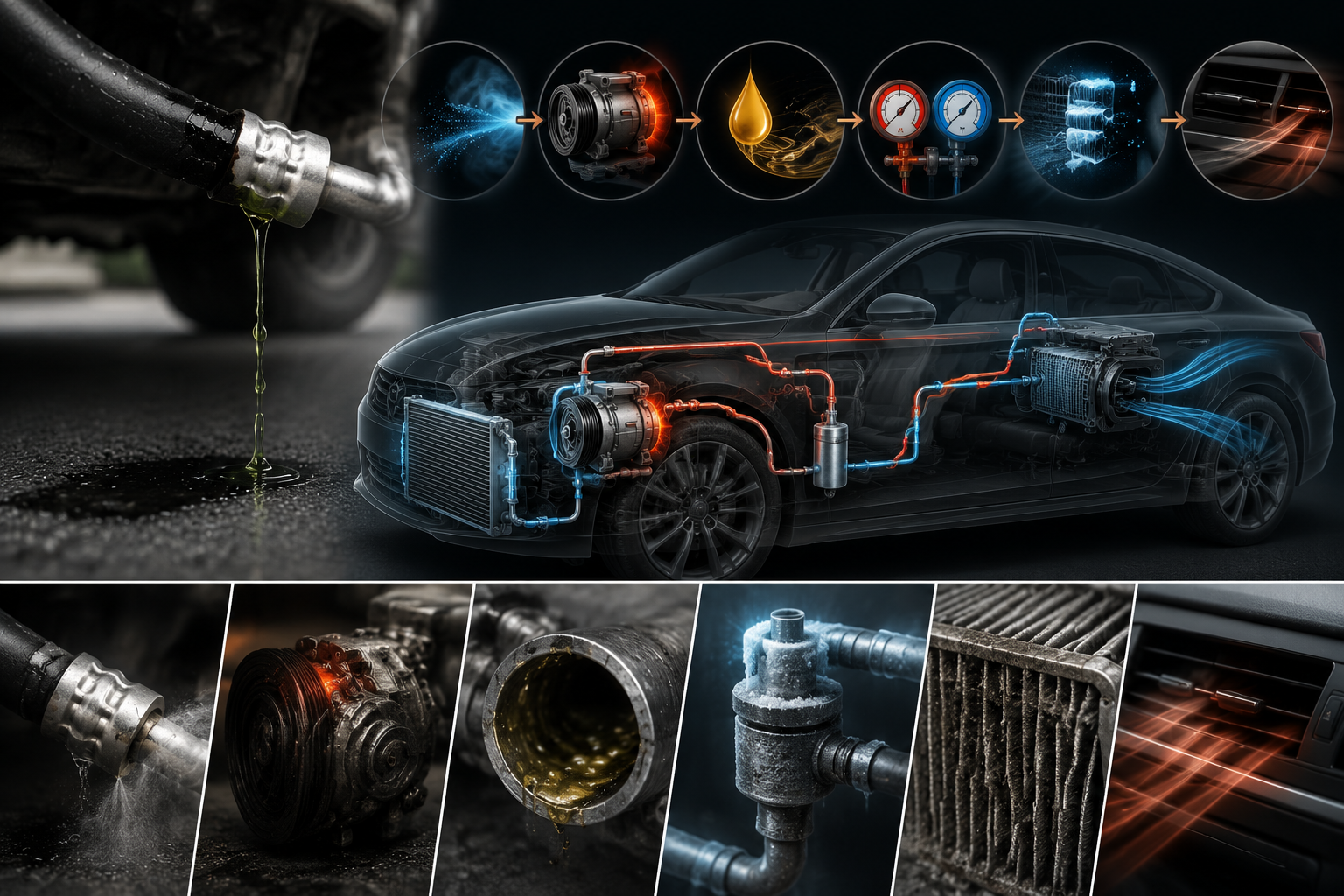
Small leaks start innocently but grow progressively worse. Refrigerant pressure forces its way through tiny cracks or loose connections. Each thermal cycle expands and contracts the hose material, enlarging the leak opening over time.
Your compressor immediately feels the effects of reduced refrigerant levels. It runs longer cycles trying to maintain cabin temperature. This extended operation generates excess heat and puts stress on bearings, pistons, and seals inside the compressor housing.
Oil circulation becomes compromised as refrigerant levels drop. Compressor oil travels with refrigerant throughout the system for lubrication2. Leaking refrigerant carries away this essential oil, leaving compressor components running dry and wearing rapidly.
System pressure imbalances develop quickly with active leaks. High-pressure and low-pressure sides lose their designed pressure differential. This forces other components like the expansion valve and evaporator to work outside optimal parameters.
Air and moisture enter through leak points, contaminating the entire system3. These contaminants freeze at expansion valves or react with refrigerant to form corrosive acids. Contamination spreads throughout the system, damaging multiple expensive components.
Temperature fluctuations increase as the leak worsens. Your AC might cool normally for short periods, then blow warm air as refrigerant pressure drops. These cycles create uncomfortable driving conditions and indicate advancing system damage.
| Leak Progression Stage | Timeframe | Symptoms | Damage Risk |
|---|---|---|---|
| Initial leak | Days-weeks | Slightly reduced cooling | Low |
| Moderate leak | Weeks-months | Intermittent cooling | Medium |
| Large leak | Days-weeks | Poor cooling, cycling | High |
| Severe leak | Hours-days | No cooling, noises | Critical |
Can a Refrigerant Leak Damage the Compressor?
The compressor represents your AC system's most expensive component. Protecting it from leak damage should be your top priority.
Refrigerant leaks cause compressor damage through oil loss, overheating, contamination, and dry running. Severe leaks can destroy compressors within hours, requiring replacements costing $800-2000 plus labor4.
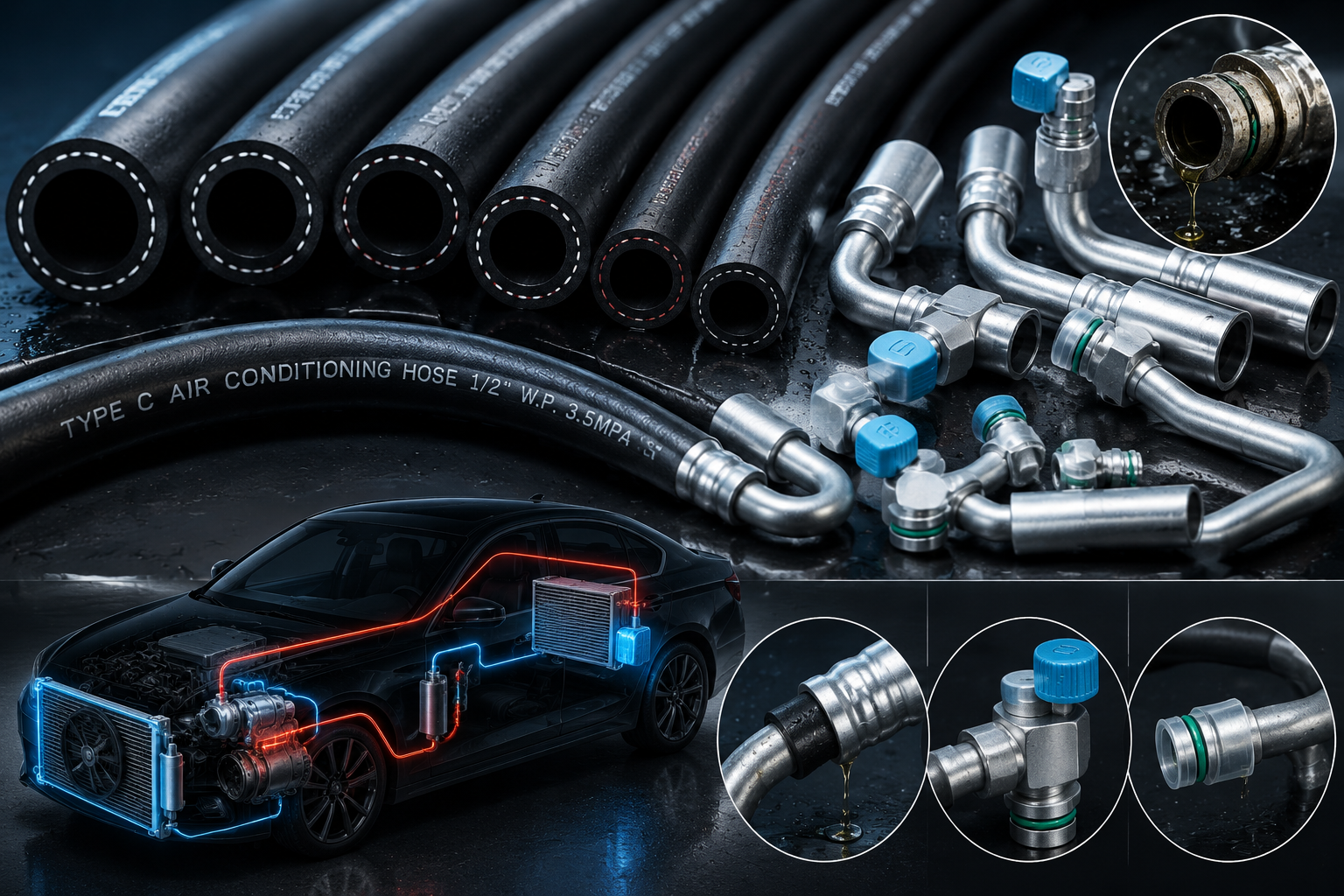
Compressor oil depletion happens faster than most people realize. This oil doesn't just lubricate - it seals internal clearances and removes heat from friction surfaces. When refrigerant leaks carry away oil, metal components contact directly.
I've torn down compressors destroyed by leak-induced oil loss. The damage looks catastrophic - scored cylinder walls, seized pistons, and destroyed bearings. Once this damage occurs, complete replacement becomes the only option.
Overheating accelerates when compressors run with insufficient refrigerant. The cooling effect that normally removes heat from compressor components disappears. Internal temperatures rise beyond design limits, warping components and destroying seals.
Liquid refrigerant entering the compressor causes hydraulic damage5. Compressors compress vapor, not liquid. When low refrigerant levels allow liquid into the compression chamber, it acts like a hydraulic hammer, cracking pistons and connecting rods.
Contamination from air and moisture creates additional problems. Moisture forms ice crystals that damage internal surfaces6. Air doesn't compress like refrigerant vapor, creating pressure spikes that stress internal components beyond their design limits.
Acid formation from moisture and refrigerant reactions eats away at metal surfaces inside the compressor. This chemical damage appears gradually but eventually destroys seals, bearings, and other precision components requiring expensive replacement.
Running the AC with known leaks compounds all these problems. Each operating cycle removes more oil and introduces more contamination. Smart drivers shut off their AC systems immediately when leaks are confirmed.
How Long Can You Drive With an AC Hose Leak?
Driving duration depends on leak severity and environmental conditions. Making the wrong choice costs thousands in unnecessary repairs.
Minor leaks allow driving for days or weeks with AC turned off. Moderate leaks permit only essential trips lasting hours. Severe leaks require immediate repair before any driving to prevent compressor destruction.
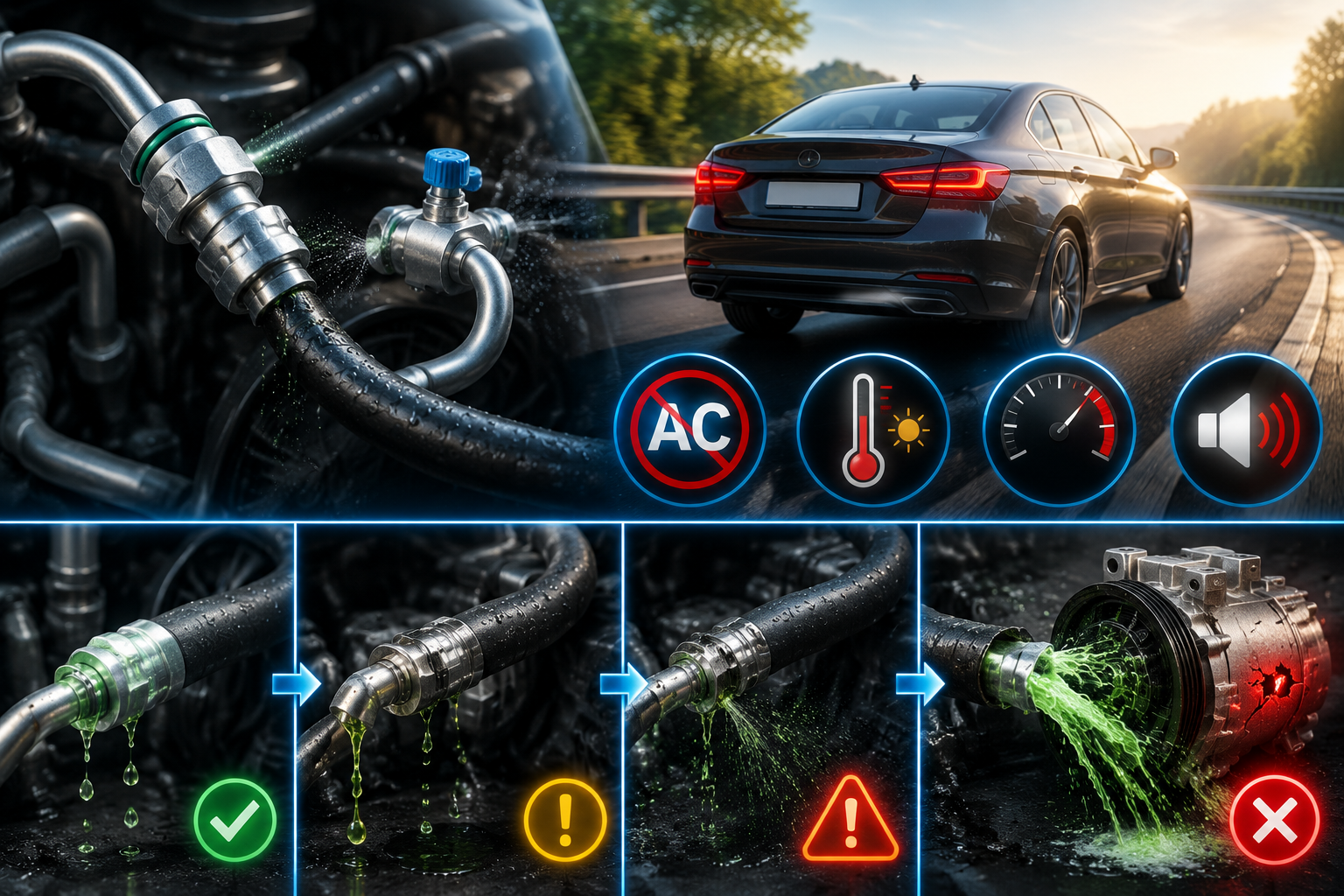
Leak size determines your safe driving window. Tiny seepage from old O-rings might allow weeks of driving without AC operation. Large hose ruptures can destroy your compressor in a single drive cycle if you keep running the AC.
I classify leaks by refrigerant loss rate for practical decision making. Slow leaks losing refrigerant over months allow normal driving with periodic system monitoring. Fast leaks emptying the system within days require immediate attention.
Ambient temperature affects leak progression significantly. Hot weather expands refrigerant and increases system pressures, accelerating leak rates7. Cold weather slows leaks but can freeze moisture entering through leak points.
Your driving habits impact damage risk substantially. Highway driving with constant AC operation stresses the system maximally. City driving with intermittent AC use reduces stress but still risks gradual damage accumulation.
System contamination accelerates with continued driving. Each mile driven with an active leak introduces more air and moisture. This contamination spreads throughout the system, increasing eventual repair costs significantly.
Emergency driving situations require different considerations. If you must drive with a known leak, turn off the AC completely. Monitor for unusual noises or smells indicating compressor distress. Stop immediately if problems develop.
Professional advice varies based on leak assessment. I tell customers with minor fitting leaks they can drive carefully for several days. Customers with visible refrigerant spraying get instructions to stop driving immediately.
| Leak Severity | Safe Driving Duration | AC Usage | Monitoring Required |
|---|---|---|---|
| Minor seepage | 2-4 weeks | Off only | Weekly inspection |
| Small leak | 3-7 days | Off only | Daily monitoring |
| Moderate leak | 1-2 days | Absolutely off | Hourly checks |
| Large leak | Stop immediately | Never | Immediate repair |
When Should You Stop Driving Immediately?
Certain symptoms indicate imminent system failure and potential safety hazards. Recognizing these warning signs prevents dangerous situations.
Stop driving immediately when you hear grinding or squealing noises, see refrigerant spraying visibly, smell sweet odors in the cabin, or notice compressor clutch cycling rapidly. These symptoms indicate critical system failure.

Unusual noises from the compressor area demand immediate attention. Grinding sounds indicate metal-to-metal contact from oil loss. Squealing suggests belt slippage from seized compressor components. Both conditions can cause sudden mechanical failure.
Visible refrigerant spraying creates multiple hazards. The refrigerant itself can cause frostbite if it contacts skin. More importantly, rapid refrigerant loss destroys compressor lubrication within minutes of continued operation.
Sweet or chemical odors inside the cabin indicate refrigerant entering the passenger compartment. While modern refrigerants are relatively safe8, high concentrations can cause dizziness or breathing difficulties in enclosed spaces9.
Compressor clutch behavior reveals system health status. Normal clutches engage smoothly and cycle occasionally. Rapid cycling, chattering, or failure to engage indicates critical pressure problems requiring immediate shutdown.
Dashboard warning lights related to engine performance sometimes accompany AC problems. Seized compressors can stress drive belts enough to affect alternator or power steering operation, triggering multiple warning systems.
Steam or smoke from under the hood never indicates normal operation. Overheated compressors can burn refrigerant oil, creating visible smoke. Seized compressors generate enough heat to damage surrounding components.
Steering or engine performance changes suggest compressor seizure affecting the drive belt system. Power steering might feel heavy, or the engine might stumble when the AC engages. These symptoms indicate mechanical problems requiring immediate attention.
I always tell customers to err on the side of caution. Stopping early prevents expensive damage. Continuing to drive with critical symptoms often turns manageable repairs into complete system replacements costing thousands.
What Is the Cost of Ignoring an AC Hose Leak?
Ignoring AC leaks transforms minor repairs into major expenses. Understanding these cost implications helps you make informed decisions about immediate repairs.
Ignoring AC hose leaks typically costs $1500-3000 in additional repairs beyond the original hose replacement. Compressor replacement, system contamination cleanup, and secondary component damage multiply repair expenses significantly.
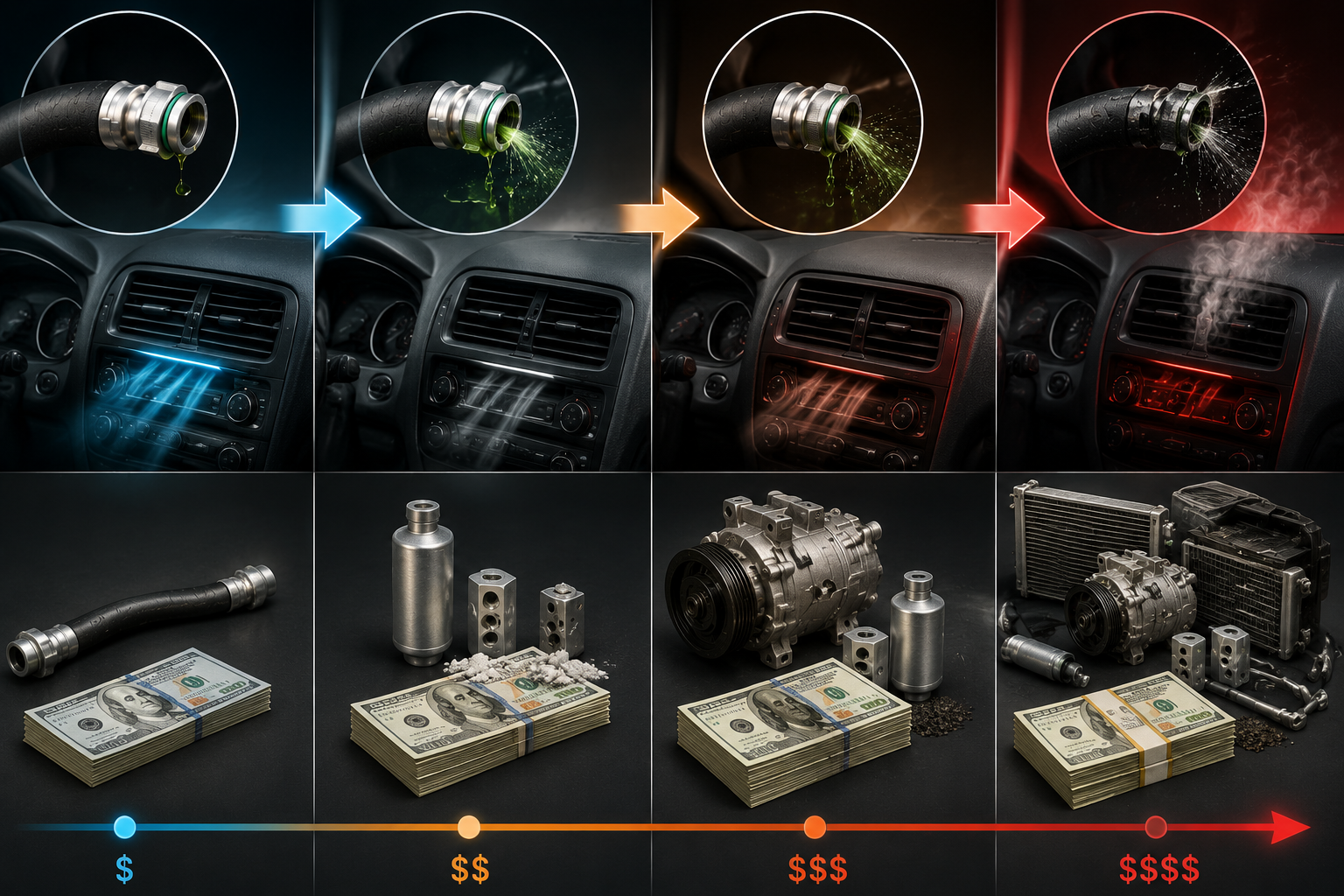
Simple hose replacement costs $150-400 when addressed promptly10. Ignoring the leak allows contamination to spread, requiring additional components like the receiver-drier, expansion valve, and sometimes the evaporator coil.
Compressor replacement represents the largest expense from neglected leaks. New compressors cost $600-1200 for parts alone11. Labor adds another $400-800 depending on vehicle complexity. Total compressor replacement often exceeds $1500.
System flushing becomes necessary when contamination spreads throughout the AC system. This process removes acids, moisture, and debris from all components. Professional flushing costs $200-400 but prevents future component failures.
Secondary component damage accumulates as contamination circulates. Expansion valves clog with debris, requiring replacement at $100-250. Receiver-driers saturate with moisture, costing $75-150 to replace. These expenses add up quickly.
Evaporator replacement represents the worst-case scenario for ignored leaks. Dashboard removal for evaporator access requires 8-12 hours of labor12. Total costs often exceed $2000 for this repair, making it economically questionable for older vehicles.
Labor multiplication occurs when multiple components require replacement simultaneously. Technicians must evacuate and recharge the system for each component change. Multiple repairs in separate visits dramatically increase labor costs.
Warranty considerations affect long-term costs significantly. Most reputable shops warranty their AC work for one year. Ignoring initial problems often voids these warranties, leaving you responsible for future failure costs.
I've tracked customer costs over my career and found that immediate hose repair saves an average of $1800 compared to delayed repairs. The math strongly favors prompt attention to AC leaks.
| Repair Scenario | Initial Cost | Additional Repairs | Total Cost |
|---|---|---|---|
| Prompt hose repair | $200-400 | None | $200-400 |
| Delayed 1 month | $300-500 | Drier, flush | $500-800 |
| Delayed 3 months | $400-600 | Compressor, flush | $1200-2000 |
| Ignored completely | $500-700 | Full system rebuild | $2500-4000 |
You can drive short distances with minor AC hose leaks if you turn off the AC completely, but prompt repair prevents expensive compressor damage and system contamination that multiply repair costs significantly.
<!--[googlesitekit-end-of-content]-->
"Performance Characteristics of Automobile Air Conditioning Using ...", https://pmc.ncbi.nlm.nih.gov/articles/PMC7516462/. Refrigerant leaks reduce system pressure and cooling capacity as the refrigerant charge decreases, forcing the compressor to work harder to maintain temperature control. Evidence role: mechanism; source type: education. Supports: the relationship between refrigerant loss and AC system pressure/cooling performance. Scope note: Source describes general AC system behavior rather than specific leak progression rates ↩
"How Does Car AC Work? | UTI - Universal Technical Institute", https://www.uti.edu/blog/automotive/air-conditioning. In automotive AC systems, compressor oil is carried by refrigerant throughout the system to lubricate moving components and maintain proper compressor function. Evidence role: mechanism; source type: education. Supports: the mechanism by which compressor oil circulates with refrigerant for system lubrication. ↩
"Handling Contaminated Automotive Refrigerants | US EPA", https://www.epa.gov/mvac/handling-contaminated-automotive-refrigerants. When AC systems develop leaks, atmospheric air and moisture can enter the system, introducing contaminants that can form acids and ice crystals that damage components. Evidence role: mechanism; source type: education. Supports: how atmospheric air and moisture enter and contaminate AC systems through leak points. ↩
"How Much Does it Cost to Replace Your Car's AC Compressor?", https://www.autozone.com/diy/climate-control/what-does-an-ac-compressor-replacement-cost. Automotive AC compressor replacement typically costs between $800-2000 for parts, with additional labor charges varying by vehicle complexity. Evidence role: statistic; source type: other. Supports: typical cost ranges for automotive AC compressor replacement. Scope note: Costs vary significantly by vehicle make, model, and geographic region; timeframe for damage depends on leak severity and operating conditions ↩
"[PDF] Refrigerant Liquid Slugging In The suction System Of Reciprocating ...", https://docs.lib.purdue.edu/cgi/viewcontent.cgi?article=3522&context=icec. Compressors are designed to compress refrigerant vapor; when liquid refrigerant enters the compression chamber, it cannot be compressed and causes hydraulic shock that can crack pistons and damage internal components. Evidence role: mechanism; source type: education. Supports: the mechanism by which liquid refrigerant damages compressors designed to compress vapor. ↩
"moisture inside an air conditioning and refrigeration system - Errecom", https://www.errecom.com/en/ask-chemist-moisture-airconditioning-refrigeration-system/. Moisture contamination in AC systems can freeze at expansion valves and other restriction points, forming ice crystals that obstruct flow and damage precision surfaces. Evidence role: mechanism; source type: education. Supports: how moisture contamination leads to ice formation and component damage in AC systems. ↩
"[PDF] Effect of Refrigerant Charge, Compressor Speed and Air Flow ...", https://docs.lib.purdue.edu/cgi/viewcontent.cgi?article=2469&context=iracc. Higher ambient temperatures increase refrigerant pressure in AC systems according to thermodynamic principles, which can accelerate leak rates through existing openings due to increased pressure differential. Evidence role: mechanism; source type: education. Supports: the relationship between ambient temperature, refrigerant pressure, and leak progression. ↩
"Refrigerant Safety | US EPA", https://www.epa.gov/snap/refrigerant-safety. Modern automotive refrigerants like R-134a and HFO-1234yf have lower toxicity profiles than earlier refrigerants, though they can still cause adverse effects in high concentrations or enclosed spaces. Evidence role: general_support; source type: government. Supports: the relative safety profile of modern automotive refrigerants. Scope note: Safety is relative to older refrigerants and depends on concentration and exposure conditions ↩
"Exposure Guidance Levels for Hydrofluorocarbon-134a - NCBI", https://www.ncbi.nlm.nih.gov/books/NBK231519/. Exposure to high concentrations of automotive refrigerants in poorly ventilated spaces can displace oxygen and cause symptoms including dizziness, difficulty breathing, and other adverse effects. Evidence role: general_support; source type: government. Supports: potential health effects from refrigerant exposure in enclosed spaces. Scope note: Specific symptoms and concentration thresholds vary by refrigerant type and individual sensitivity ↩
"Is $800 too much for AC hose repair? : r/MechanicAdvice - Reddit", https://www.reddit.com/r/MechanicAdvice/comments/1534pfd/is_800_too_much_for_ac_hose_repair/. Automotive AC hose replacement typically costs between $150-400 depending on hose location, vehicle accessibility, and whether refrigerant recovery and recharge are included. Evidence role: statistic; source type: other. Supports: typical cost range for AC hose replacement services. Scope note: Costs vary significantly by vehicle make, model, geographic location, and specific hose affected ↩
"How Much Does it Cost to Replace Your Car's AC Compressor?", https://www.autozone.com/diy/climate-control/what-does-an-ac-compressor-replacement-cost. Automotive AC compressor parts typically cost between $600-1200, with significant variation based on vehicle make, model, compressor type, and whether OEM or aftermarket parts are used. Evidence role: statistic; source type: other. Supports: typical parts cost for automotive AC compressor replacement. Scope note: Prices vary widely by vehicle type, brand preference, and market conditions ↩
"Cost and complexity of installing an evaporator in a vehicle's AC ...", https://www.facebook.com/groups/lehighacresflcommunitybulletinboard/posts/7773107796120881/. Automotive evaporator replacement typically requires 8-12 hours of labor due to the need for extensive dashboard disassembly to access the evaporator core in most vehicles. Evidence role: statistic; source type: other. Supports: typical labor time required for evaporator replacement involving dashboard removal. Scope note: Labor time varies significantly by vehicle design, with some models requiring substantially more or less time ↩