Your AC blows warm air but you can't see any obvious damage. Something's wrong but you're not sure what to look for.
AC hose leak symptoms include weak cooling, oily residue around fittings, hissing sounds, frequent refrigerant loss, and compressor cycling issues. These signs often appear gradually before complete system failure.
After twenty years in the AC business, I've learned to read the warning signs before customers even describe their problems. Your AC system talks to you through subtle symptoms. Learning this language saves money and prevents roadside breakdowns on hot summer days.
What Are the First Signs of an AC Hose Leak?
Most people miss early warning signs until their AC completely fails. I've seen this pattern countless times in my workshop.
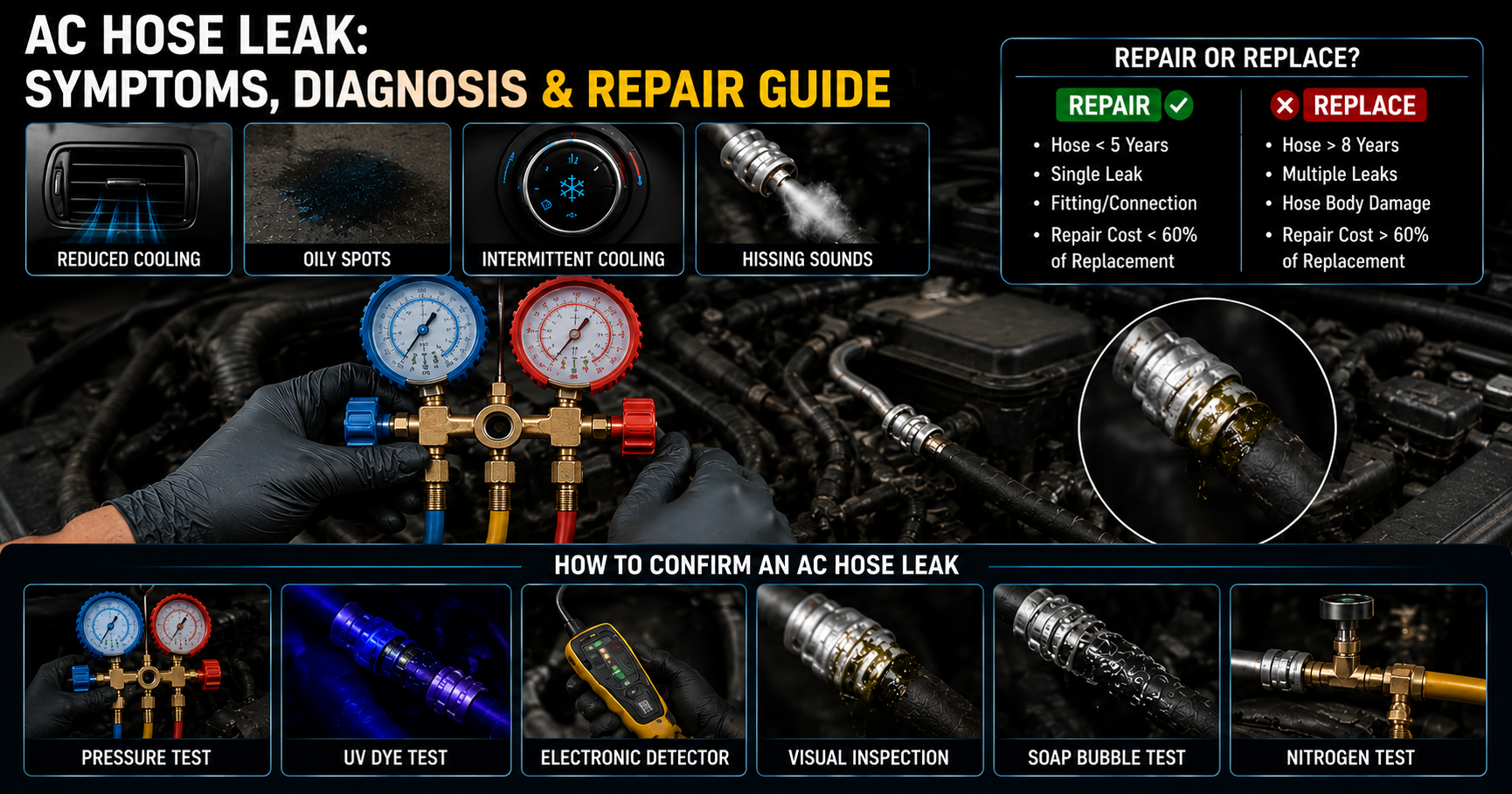
The first signs include slightly reduced cooling performance, oily spots on garage floors, intermittent compressor operation, and unusual hissing sounds when the AC runs. These symptoms often develop over weeks or months.
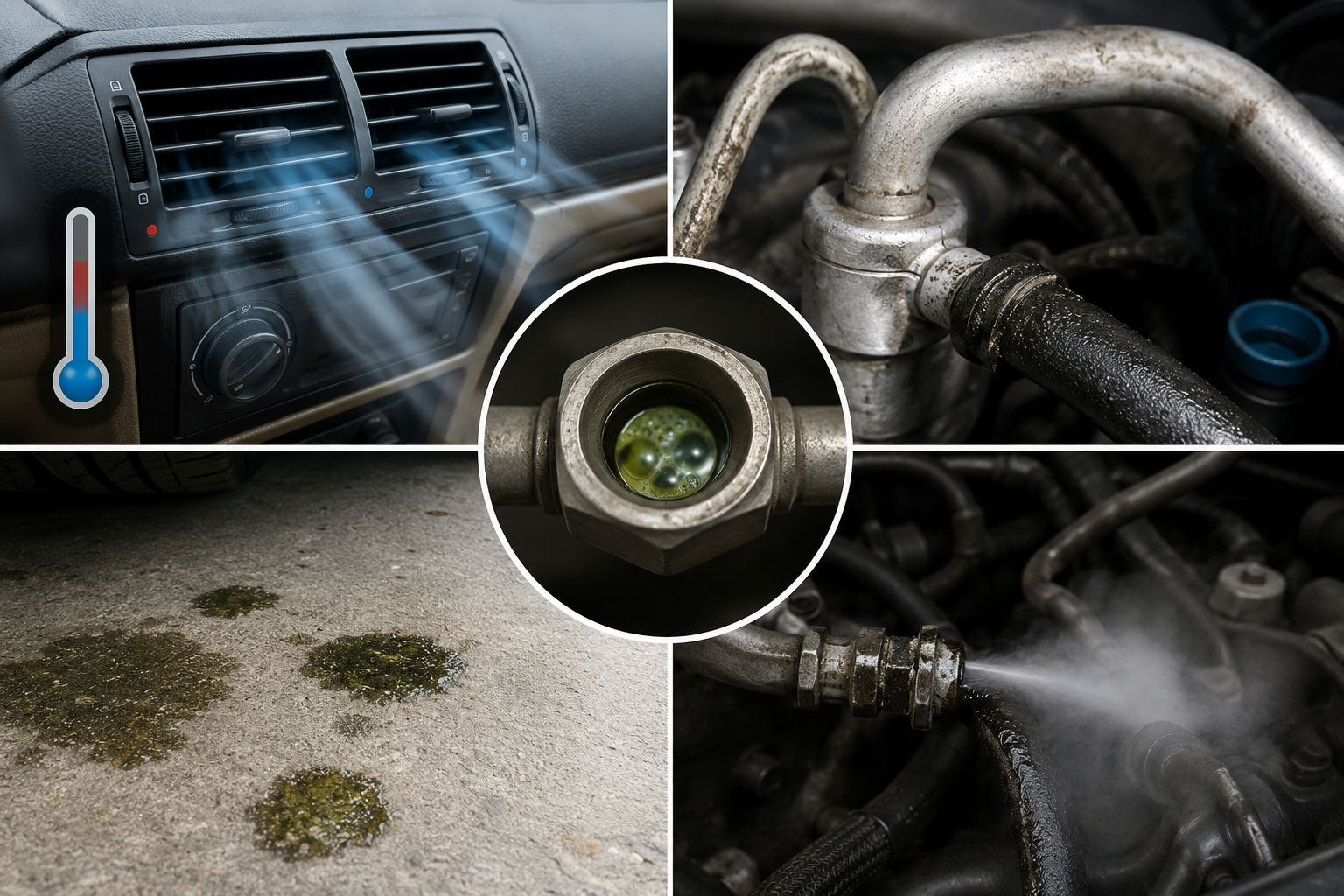
Reduced cooling efficiency appears first in most cases. Your AC takes longer to cool the cabin or struggles on extremely hot days. Many customers ignore this thinking their system needs a simple recharge.
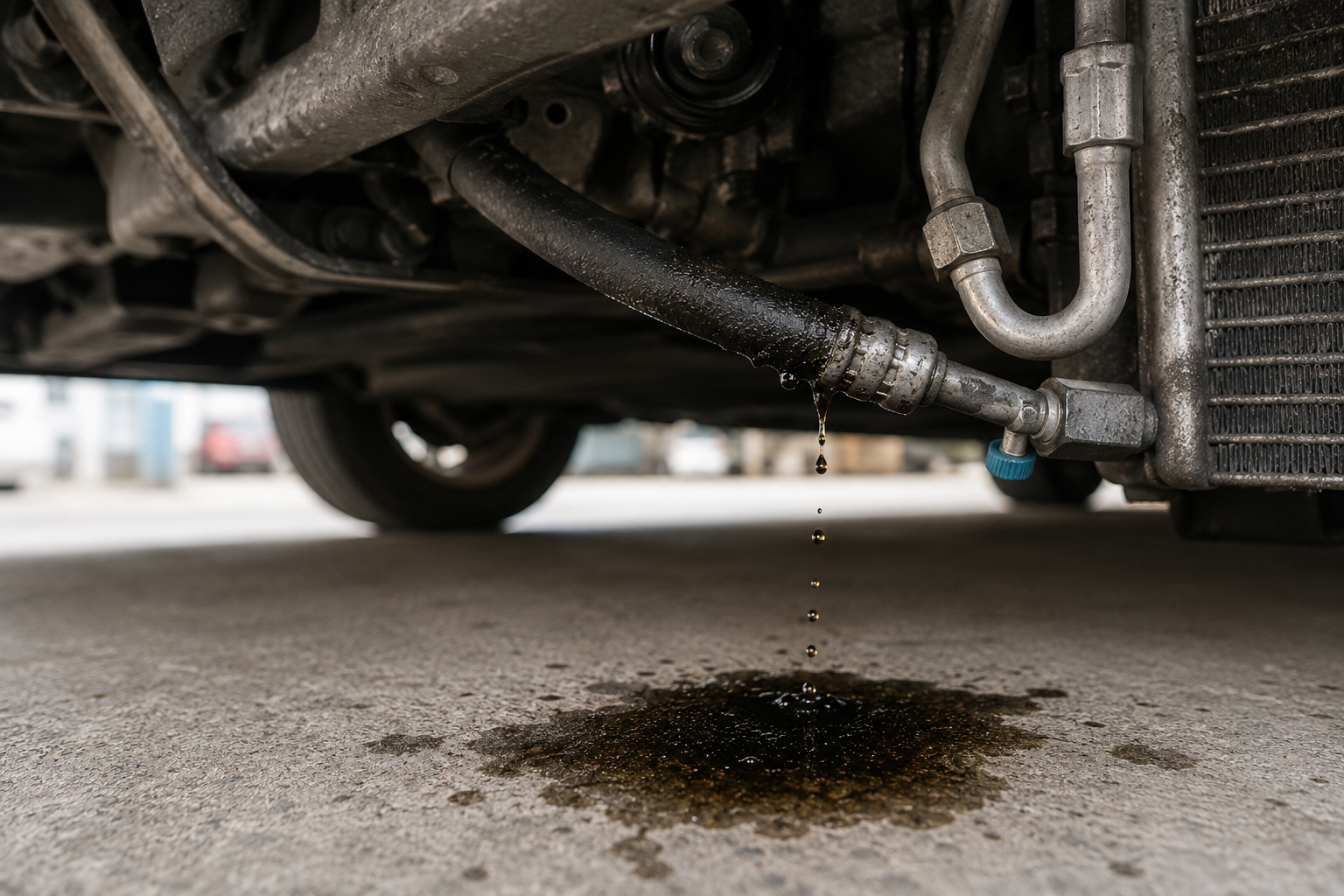
I always tell clients to check their garage floor regularly. Small oil spots under the car often indicate refrigerant leaks. The oil carries UV dye and lubricants from inside the AC system. Fresh spots appear regularly with active leaks.
Listen for unusual sounds when your AC engages. Healthy systems run quietly with occasional compressor cycling. Continuous hissing, squealing, or grinding suggests problems developing. I've traced many leaks by following these audio clues.
Watch your compressor behavior through the sight glass if your vehicle has one. Normal operation shows steady refrigerant flow with occasional bubbles. Constant bubbles or foam indicates low refrigerant levels from leaking hoses.
Temperature variations between vents sometimes signal partial blockages or leaks in specific hose sections. The passenger side might blow cooler than the driver side, indicating issues with particular refrigerant lines.
| Early Symptom | Timeline | Severity | Action Required |
|---|---|---|---|
| Slightly warm air | 2-4 weeks | Low | Monitor closely |
| Oil spots appearing | 1-2 weeks | Medium | Schedule inspection |
| Intermittent cooling | 3-7 days | High | Immediate diagnosis |
| Hissing sounds | 1-3 days | Critical | Stop use, repair |
Why Does a Leaking AC Hose Affect Cooling Performance?
Understanding the cooling process helps you recognize why even small leaks cause major problems. I explain this to every customer.
Leaking hoses reduce refrigerant pressure and volume, disrupting the heat exchange cycle. Low refrigerant prevents proper evaporation and condensation, resulting in warm air output and potential compressor damage.
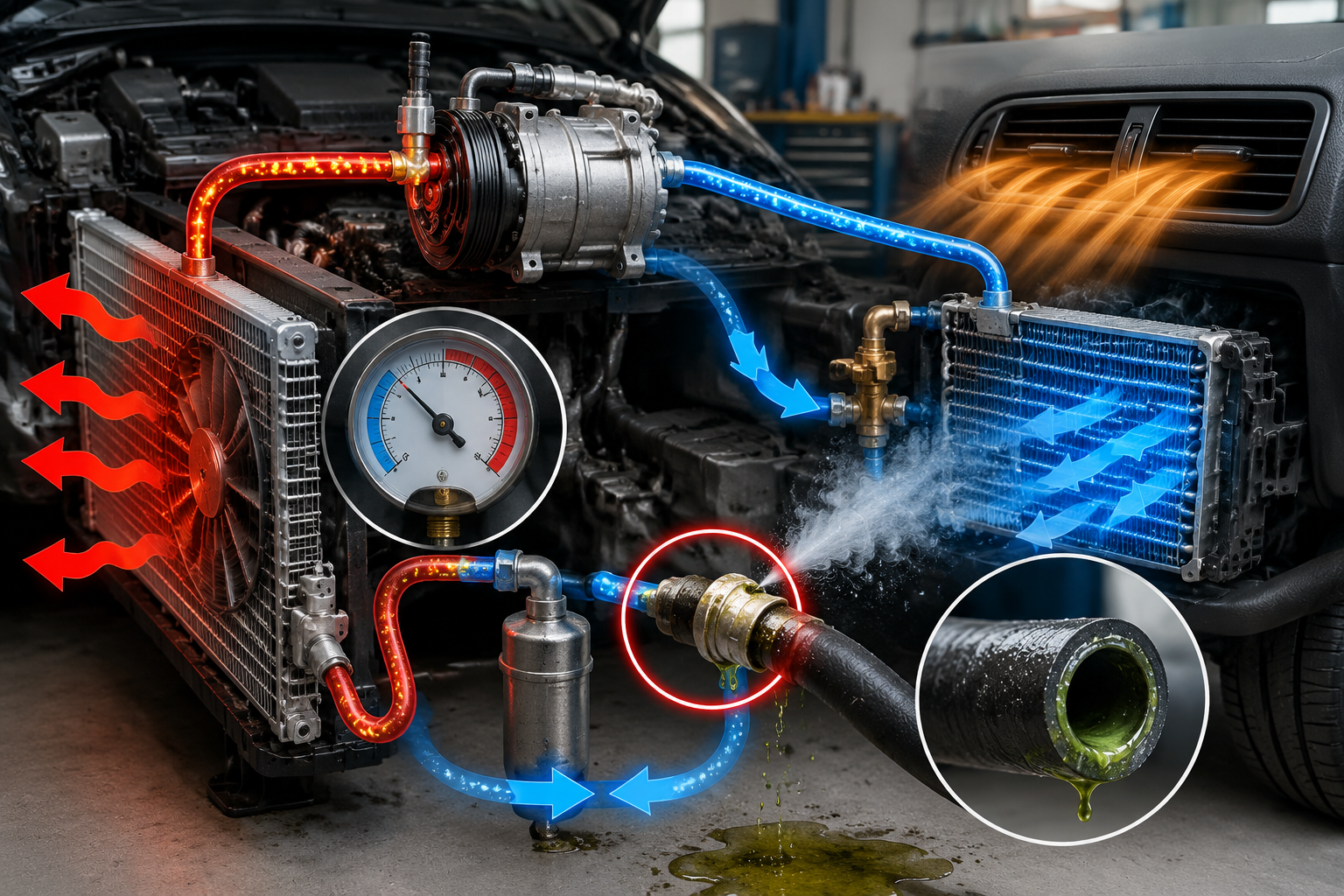
Your AC system depends on precise refrigerant pressure and flow rates. Think of it like your home's plumbing - even small leaks reduce water pressure throughout the system. AC systems work similarly but with much tighter tolerances.
Refrigerant absorbs heat when it evaporates in the evaporator coil inside your dashboard. This process requires specific pressure levels to work efficiently. Leaking hoses drop system pressure below optimal ranges, reducing heat absorption capacity.
The compressor works harder when refrigerant levels drop. It tries compensating by running longer cycles or increasing pressure. This extra workload generates heat and accelerates wear on expensive components. I've replaced many compressors that failed due to leak-induced overwork.
Low refrigerant affects the condenser's ability to release heat. The refrigerant can't condense properly at reduced pressures, creating a cascading effect throughout the cooling cycle. Hot refrigerant stays hot instead of cooling down for the next cycle.
Oil circulation suffers with refrigerant loss1. The oil that lubricates your compressor travels with refrigerant through the system. Leaks remove both refrigerant and oil, leading to compressor bearing damage and eventual seizure.
Air and moisture enter through leak points, contaminating the system2. These contaminants freeze at the expansion valve or react with refrigerant to form acids3. Contamination damages multiple components and requires expensive system flushing.
Can Low Refrigerant Cause Similar Symptoms?
Many customers ask about the difference between leaks and simple low refrigerant. The distinction matters for proper diagnosis and repair.
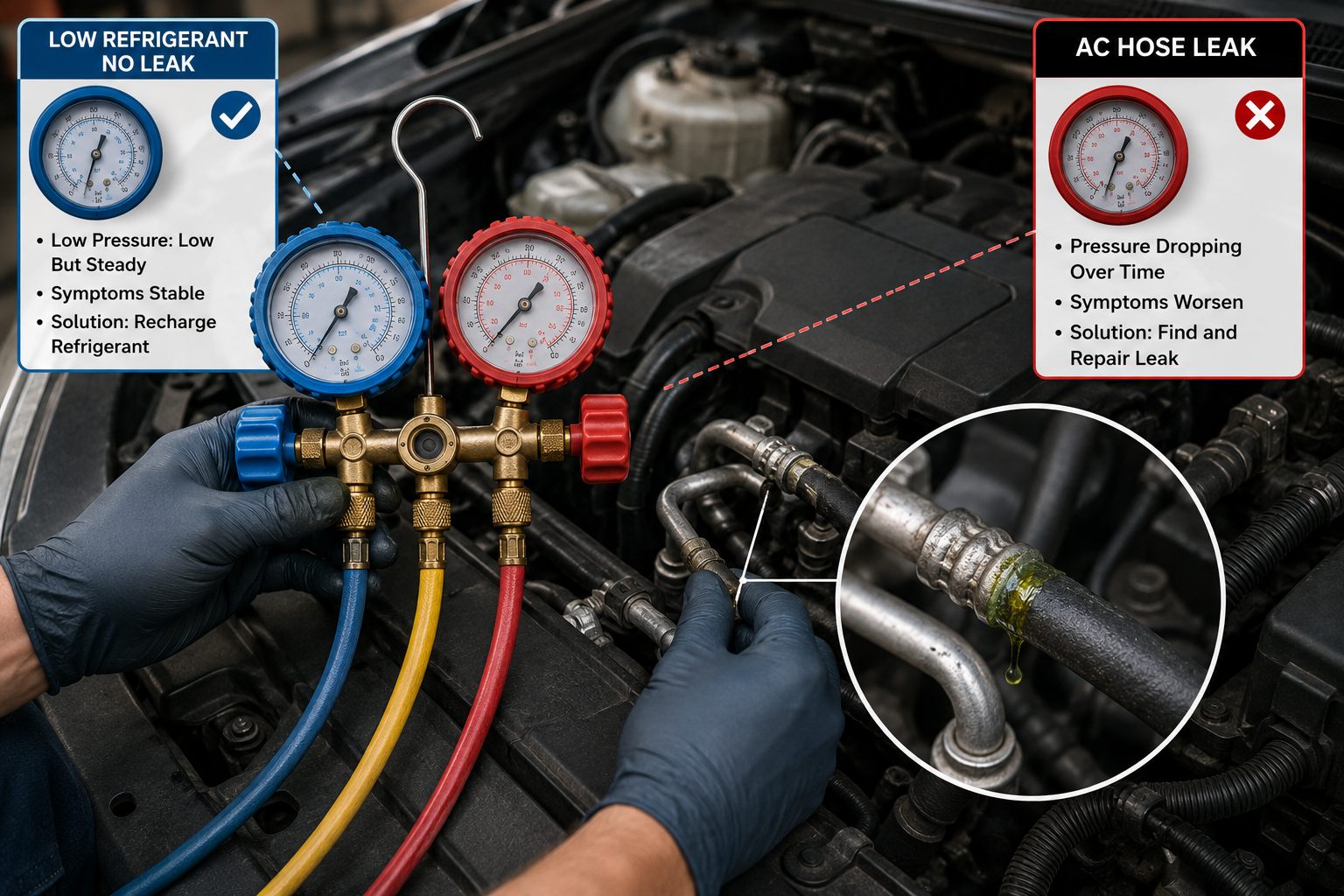
Low refrigerant from leaks and low refrigerant from other causes produce identical symptoms initially. However, leak-related refrigerant loss continues progressively, while other causes remain stable once corrected.
Refrigerant doesn't simply disappear without reason. Unlike engine oil that burns during combustion, refrigerant circulates in a sealed system. Significant refrigerant loss almost always indicates leaks somewhere in the system.
Normal systems lose tiny amounts of refrigerant annually through microscopic permeation4. This natural loss amounts to 1-3% per year in healthy systems. Anything more suggests active leaking requiring investigation.
Previous service work sometimes leaves systems slightly undercharged. Technicians might not add sufficient refrigerant during maintenance or repairs. This creates immediate symptoms but refrigerant levels stabilize after proper charging.
Overcharging causes symptoms similar to undercharging. Too much refrigerant increases system pressures beyond design limits, reducing cooling efficiency. The compressor struggles with liquid refrigerant instead of vapor, causing poor performance.
I use manifold gauges to distinguish between these conditions. Steady low pressures indicate simple undercharge. Continuously dropping pressures over time confirm active leaks. Pressure readings help determine the root cause accurately.
System contamination can mimic low refrigerant symptoms. Moisture or debris blocks refrigerant flow, creating artificial shortages in specific system areas. These blockages require different repairs than simple recharging.
| Condition | Pressure Pattern | Symptom Progression | Solution |
|---|---|---|---|
| Simple undercharge | Steady low | Stable poor cooling | Recharge only |
| Active leak | Continuously dropping | Worsening over time | Find and repair leak |
| Overcharge | High pressures | Poor cooling, noise | Remove excess refrigerant |
| Blockage | Uneven readings | Intermittent issues | Clean system |
How to Confirm an AC Hose Leak?
Suspecting a leak and confirming one requires different approaches. I use systematic testing to provide definitive answers.
Confirm AC hose leaks using pressure testing, UV dye tracing, electronic leak detection, or visual oil residue inspection. Combine multiple methods for accurate diagnosis before starting repairs.
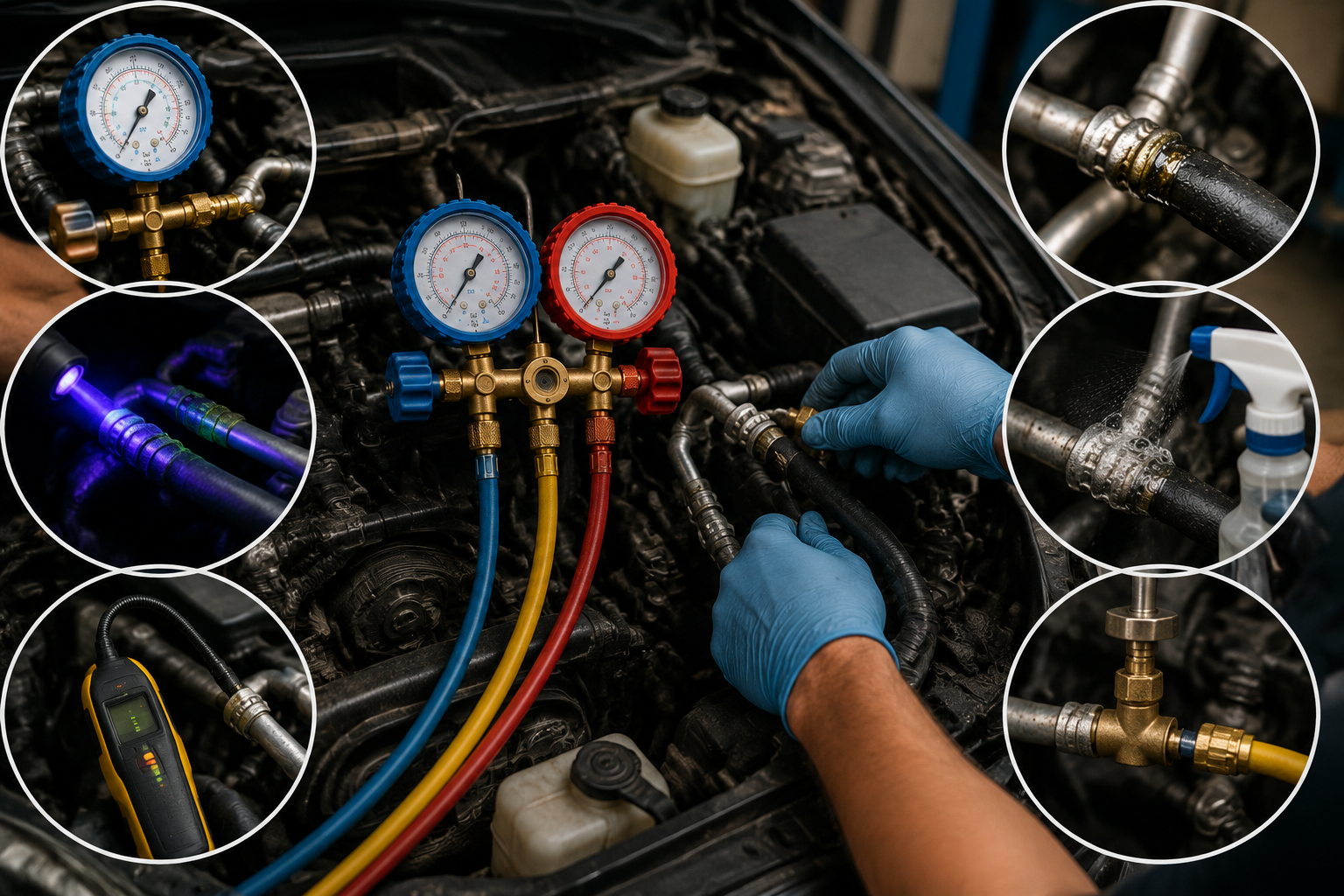
Pressure testing provides the most reliable confirmation method5. I connect manifold gauges and monitor pressures over 15-30 minutes with the system off. Dropping pressures indicate leaks somewhere in the system.
UV dye injection offers visual confirmation of leak locations6. Add dye to the system, run the AC for 20 minutes, then inspect with UV light. Bright fluorescent traces appear at leak points, making them easy to locate and photograph.
Electronic leak detectors sense refrigerant molecules in ambient air7. Move the probe slowly around all hose connections and fittings. Steady beeping or visual alerts pinpoint exact leak locations. These tools work especially well for small leaks.
Visual inspection reveals many leaks through oil residue patterns. Refrigerant carries compressor oil through the system. Leaks leave oily deposits around fittings, connections, and hose surfaces. Fresh oil indicates active leaking.
Soap bubble testing works for accessible fittings and connections. Apply soapy water to suspected areas while the system runs. Bubbles form at leak points, providing immediate visual confirmation. This method works best for larger leaks.
Nitrogen pressure testing offers definitive results for suspected leaks8. Evacuate the system completely, then pressurize with nitrogen gas. Monitor pressure levels over several hours. Any pressure drop confirms leaks requiring repair.
Professional-grade equipment provides the most accurate results. Refrigerant recovery machines, vacuum pumps, and electronic detectors give precise readings. However, basic testing methods work for most diagnostic needs.
When Should You Repair or Replace the Hose?
This decision affects repair costs, reliability, and future maintenance needs. I guide customers through this choice based on specific criteria.
Repair hoses under 5 years old with single small leaks at fittings. Replace hoses over 8 years old9, multiple leak points, extensive damage, or when repair costs exceed 60% of replacement cost.
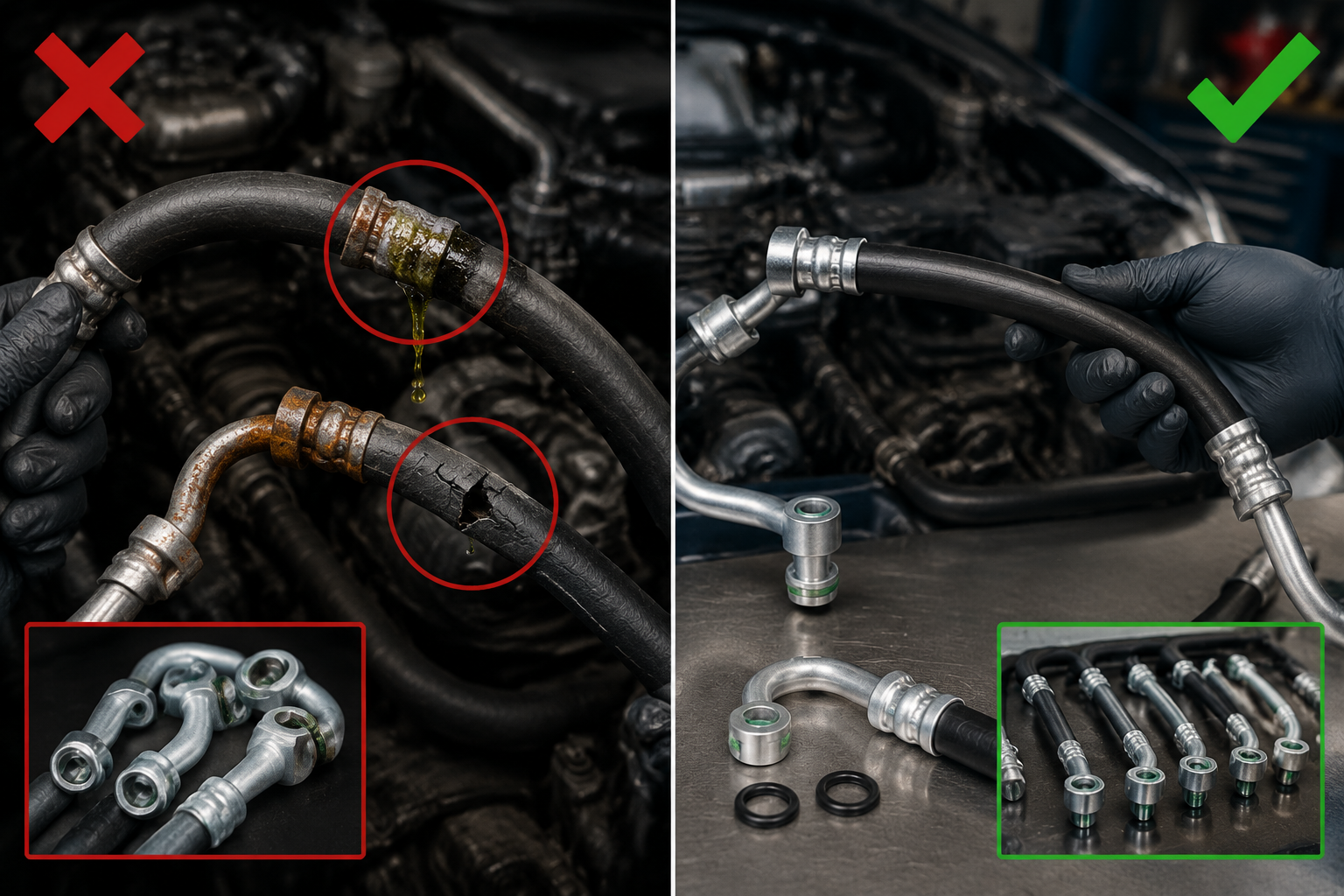
Age represents the primary decision factor in my recommendations. Newer hoses with isolated fitting leaks often respond well to O-ring replacement or connection repairs. The rubber remains flexible and other connection points stay reliable.
Older hoses present different challenges entirely. Rubber compounds deteriorate over time, becoming brittle and developing multiple weak points10. I've watched customers repair one leak only to face two more within months on aging hoses.
Leak location significantly impacts repairability. Fitting leaks at connections usually repair successfully with new gaskets and proper torquing. Body leaks in the hose rubber rarely repair reliably and often indicate material failure.
Multiple leak points always suggest complete hose replacement. When several areas fail simultaneously, the entire hose has reached end-of-life. Attempting multiple repairs costs approach replacement while providing questionable reliability.
Consider your vehicle's overall condition and planned service life. High-mileage vehicles nearing replacement might justify temporary repairs. Newer cars you plan keeping long-term benefit from proper hose replacement for reliability.
Environmental exposure affects hose longevity significantly. Vehicles in harsh climates with extreme temperatures, road salt, or industrial contamination age hoses faster11. These conditions accelerate deterioration and promote premature failure.
System contamination sometimes forces replacement decisions regardless of hose age. Moisture, debris, or acidic contamination damages hose interiors beyond repair capabilities. New hoses prevent continued damage to expensive components.
| Decision Factor | Repair | Replace |
|---|---|---|
| Hose age | Under 5 years | Over 8 years |
| Leak count | Single | Multiple |
| Location | Fitting/connection | Hose body |
| Repair cost | Under 40% replacement | Over 60% replacement |
| Vehicle value | Low/aging | High/newer |
| Expected reliability | 1-2 years | 5-8 years |
Understanding AC hose leak symptoms helps you catch problems early, preventing expensive repairs and ensuring reliable cooling when you need it most.
<!--[googlesitekit-end-of-content]-->
"[PDF] Oil Effects On Performance Of Automobile A/C System", https://docs.lib.purdue.edu/cgi/viewcontent.cgi?article=2647&context=iracc. Compressor oil is designed to be miscible with refrigerant, allowing it to circulate through the system and return to the compressor for continuous lubrication of moving parts. Evidence role: mechanism; source type: education. Supports: the principle that compressor lubricating oil circulates with refrigerant throughout AC systems. Scope note: Oil circulation efficiency depends on refrigerant type, oil formulation, system design, and operating conditions. ↩
"Chilly refrigerants contribute disproportionately to warming the Earth", https://ecology.wa.gov/blog/march-2025/chilly-refrigerants-contribute-disproportionately-to-warming-the-earth. When refrigeration systems operate below atmospheric pressure or during shutdown, leaks allow moisture and non-condensable gases to enter, potentially causing ice formation, acid formation, and elevated system pressures. Evidence role: mechanism; source type: education. Supports: how atmospheric moisture and air contaminate refrigeration systems through leak points and cause operational problems. Scope note: Contamination severity depends on leak size, system pressure conditions, ambient humidity, and duration of exposure. ↩
"[PDF] Effects Of Water In Synthetic Lubricant Systems And Clathrate ...", https://docs.lib.purdue.edu/cgi/viewcontent.cgi?article=1597&context=iracc. Moisture in refrigeration systems can freeze at expansion devices where pressure drops cause temperature reduction, and can hydrolyze with certain refrigerants in the presence of heat and metals to form corrosive acids. Evidence role: mechanism; source type: research. Supports: chemical processes by which moisture reacts with refrigerants and causes ice blockages or acid formation. Scope note: Reaction rates and severity vary by refrigerant type, system temperature, metal catalysts present, and moisture concentration. ↩
"[PDF] Manufacturers Advisory Correspondence MAC 2022-01 Att 1", https://ww2.arb.ca.gov/sites/default/files/2022-03/attachment_1.pdf. Industry studies indicate that sealed automotive AC systems experience gradual refrigerant loss through hose and seal permeation, with rates varying by system age, materials, and operating conditions. Evidence role: statistic; source type: research. Supports: typical annual refrigerant loss rates in automotive AC systems through permeation. Scope note: Loss rates vary significantly based on system design, component materials, and environmental factors; the 1-3% figure represents a general range rather than a universal standard. ↩
"Most reliable refrigerant leak detection method? : r/hvacadvice - Reddit", https://www.reddit.com/r/hvacadvice/comments/1n0pq6y/most_reliable_refrigerant_leak_detection_method/. Pressure decay testing is widely recognized in HVAC diagnostics as a quantitative method for detecting system leaks, though detection sensitivity depends on leak size, test duration, and pressure stabilization. Evidence role: expert_consensus; source type: institution. Supports: industry recognition of pressure testing as a fundamental leak detection method. Scope note: While pressure testing confirms leak presence, it does not locate leak positions; other methods like UV dye or electronic detection are needed for pinpointing specific leak sites. ↩
"Using UV leak detection dye to find a/c system leaks - YouTube", https://www.youtube.com/watch?v=NHToa7N4zNA. Fluorescent dye additives compatible with refrigerant and oil circulate through AC systems and accumulate at leak points, becoming visible under UV light to aid in leak localization. Evidence role: mechanism; source type: education. Supports: the principle and application of fluorescent dye for leak detection in refrigeration systems. Scope note: Detection effectiveness depends on leak size, dye concentration, circulation time, and accessibility for UV inspection; very small leaks may not accumulate sufficient dye for visual detection. ↩
"Guide to Good Leak Testing", https://www.epa.gov/sites/default/files/documents/RealZeroGuidetoGoodLeakTesting.pdf. Electronic refrigerant detectors employ various sensing technologies including heated diode, infrared absorption, or ultrasonic methods to detect refrigerant molecules or leak sounds, with sensitivity varying by technology and refrigerant type. Evidence role: mechanism; source type: education. Supports: the sensing technologies used in electronic refrigerant leak detectors. Scope note: Detection sensitivity, selectivity, and reliability vary significantly among detector technologies and models; environmental factors like wind and background contamination can affect accuracy. ↩
"Nitrogen Leak Detector - Amazon.com", https://www.amazon.com/nitrogen-leak-detector/s?k=nitrogen+leak+detector. Nitrogen is used for pressure testing refrigeration systems because it is inert, dry, non-flammable, and readily available, allowing safe pressurization above operating levels to detect leaks without introducing moisture or reactive contaminants. Evidence role: mechanism; source type: education. Supports: the rationale for using nitrogen in pressure testing of refrigeration systems. Scope note: Nitrogen testing requires complete refrigerant evacuation and recovery; test pressures must not exceed system design limits to avoid component damage. ↩
"When is it time to replace? - Energy Star", https://www.energystar.gov/saveathome/heating-cooling/replace. Automotive service guidelines generally recognize that AC system hoses have finite service lives affected by age, mileage, and operating conditions, though specific replacement intervals vary by manufacturer recommendations and component quality. Evidence role: general_support; source type: institution. Supports: industry perspectives on service life and replacement timing for automotive AC hoses. Scope note: The 8-year threshold represents a general guideline rather than a universal standard; actual replacement timing should consider hose condition, leak history, and manufacturer specifications. ↩
"Thermal Oxidative Aging and Service Life Prediction of Commercial ...", https://pmc.ncbi.nlm.nih.gov/articles/PMC11085669/. Elastomeric materials in automotive hoses undergo degradation through thermal cycling, oxidation, ozone exposure, and refrigerant/oil interaction, leading to hardening, cracking, and loss of flexibility over time. Evidence role: mechanism; source type: research. Supports: degradation processes affecting rubber and elastomer materials in automotive hoses. Scope note: Degradation rates vary widely based on rubber formulation, operating temperatures, refrigerant type, environmental exposure, and manufacturing quality. ↩
"Mechanism of Accelerated Deterioration of High-Temperature ... - PMC", https://pmc.ncbi.nlm.nih.gov/articles/PMC10420937/. Environmental factors including thermal cycling, UV exposure, ozone, salt spray, and chemical contaminants accelerate elastomer aging through oxidation, chain scission, and plasticizer loss, reducing material properties and service life. Evidence role: mechanism; source type: research. Supports: how environmental stressors accelerate degradation of elastomeric automotive components. Scope note: Degradation rates depend on specific material formulations, protective coatings, component location, and cumulative exposure levels; modern hose materials often include stabilizers to resist environmental degradation. ↩